Tag Archives: Judaism

A Tale of Two Jews: Lessons we can learn from the Donald Sterling affair

2 May

donald-sterling-social-media reaction-to-donald-sterling-ban John Wooden, the legendary basketball coach of UCLA once said: “Sports do not build character. They reveal it.” Wooden, himself an English teacher by trade, understood the power of sports as a metaphor for life. We turn to sports as participants and spectators in order to reenact the much larger dramas that play out in every aspect of our lives. Recognizing the role spectator sports play in our lives, it is no surprise that the nation has been riveted by the sordid controversy surrounding Donald Sterling, the embattled owner of the Los Angeles Clippers.

The controversy became public when a recorded conversation allegedly between Sterling and his mistress, V. Stiviano, was leaked to the media. In the conversation, Sterling goes on a racist rant about black people and voices his dismay that his girlfriend posed for a photograph with Magic Johnson, an African American. As our nation voyeuristically listened in on this conversation, there has been widespread outrage. In response, NBA Commissioner Adam Silver issued a strong condemnation and meted out the harshest punishment at his disposal: a lifetime ban from the NBA.

As this story unfolded, numerous questions have arisen in the public and, I suspect, in many of our minds. Some examples: Why did the girlfriend make this recording to begin with? Why was it leaked? If Sterling had a history of bigoted statements, as is apparently the case, why didn’t the NBA take action long ago? What was it about this private conversation that inflamed our collective emotions? And, is anything really private anymore (the answer to that is, no).

Among all of these questions, the first question to come to my mind after the story broke was, “Is Donald Sterling Jewish?” Unfortunately, the answer to that is yes. He changed his name from Tokowitz. In addition the recorded discussion veers into Israel and the Holocaust. The mistress asks Sterling if black Jews are inferior to white Jews and he says, “a hundred percent.” She then draws an analogy between his racism and the Holocaust.

Stiviano: “Isn’t [racism] wrong? Wasn’t it wrong then? With the Holocaust? And you’re Jewish, you understand discrimination.”

Sterling: “You’re a mental case, you’re really a mental case.”

So, add Donald Sterling to the list of members of our tribe who have discredited our reputation before the community at large.

We need not fret too much, however. Adam Silver, the new Commissioner of the NBA has handled this test of his leadership with decisiveness and grace. Clearly, he is Jewish as well. His forceful statement demonstrated integrity and a commitment to healing. So, while Sterling disgraced our people, Adam Silver scored one for the Jews.

Even in our open American society, it is natural for us as an ethnic and religious minority to maintain our self-consciousness regarding external attitudes toward Jews. The tension we feel between negative and positive perceptions of Jewish people in the public sphere comes right out of this week’s Torah portion, Emor. The portion introduces two parallel concepts: Hillul HaShem, the desecration of God’s name, and Kiddush HaShem, the sanctification of God’s name. The text tells us: lo tehallelu et shem kodshi venitkadeshti b’tokh b’nei yisrael, ani Adonai mekadishchem. You shall not profane My holy name, that I may be sanctified in the midst of the Israelite people—I the Lord who sanctify you (22:32). Hillul HaShem is often defined as performing an act that reflects poorly on you in the eyes of decent human beings. Kiddush HaShem is the opposite, performing an act that reflects well in the eyes of decent human beings.

An example of Hillul HaShem is given at the end of the parasha in discussion of one who blasphemes God: ish ish ki yekallel elohav vnasa chet’o—Anyone who blasphemes God shall bear his guilt. The specific circumstances of the blaspheming are uncertain. Did the person curse God, or pronounce God’s name without due reverence? Commentators note that words are ephemeral but real and have the power to hurt or heal. Using the power of speech to hurt another person is a grave offense. Indeed, Donald Sterling’s mouth has caused plenty of hurt to millions of people; however, according to the Talmud, his actions can be seen as Hillul HaShem.

The Talmud states that there is no greater achievement for a Jew than acting in a way that causes others to praise and respect the God of Israel and the Torah’s ways; and there is no graver sin than acting in a way that causes people to think less of Israel’s God and Israel’s laws (BT Yoma 86a).

It is my hope that our society, and particularly the Jewish community, can move beyond voyeurism and sanctimony and use the national conversation on race to engage in a community Heshbon HaNefesh, a heartfelt introspection regarding our own attitudes towards race. It’s easy for any of us from a distance to listen to a salacious recording and pass judgment on a billionaire slum lord shooting his mouth off. The real question is: To what extent are we confronting racism in our own communities, our families and ourselves? If we tolerate in our own circles language and stereotypes that disparage African Americans and other ethnic groups, then we dehumanize them as “other.” When we fail to repudiate such behavior, we are as guilty as Donald Sterling of Hillul HaShem, desecration of God’s name. Let me be real specific. Let’s all make a pledge that we will not tolerate anyone using the epithet “Shvartze.” We all know what it means and what its intent is. If we think that using a Yiddish code word shields us from shame in the wider world, think again. It is a Hillul HaShem.

We have so many examples in our history of courageous Jews who dedicated themselves to building bridges and forging racial harmony in our society. The quintessential example is Rabbi Abraham Joshua Heschel marching with Martin Luther King in Selma, AL, and saying afterwards, “[M]y feet were praying.” That was a Kiddush HaShem, a sanctification of God’s name, par excellence.

The world of sport reveals one’s true character and provides a window into the challenges of life itself. This week, the NBA has put on full display the worst and the best of human character. Let us seize this moment as a learning opportunity to reject Hillul HaShem and embrace Kiddush HaShem. Through our collective efforts, may we have the strength create greater harmony and to sanctify God’s name.

#TieBlog #Emor #CountingTheOmer

1 May
Counting the Omer

Counting the Omer

Parashat Emor describes the holidays on the Jewish calendar. While other sections of the Torah describe the holidays, it is in this Torah portion that we read the mitzvah of counting the Omer, the 49 days from the second night of Passover until Shavuot. Believe it or not, you can learn more about counting the omer from Homer Simpson! In the meantime, this tie represents our mitzvah of counting the days from Passover to Shavuot.

#TieBlog #Kedoshim

25 Apr
"Love your neighbor as yourself." (Lev. 19:18)

“Love your neighbor as yourself.” (Lev. 19:18)

In Leviticus 19 we learn the command to “Love your neighbor as yourself” (v.18). The tie represents a neighborhood of people–some feeling loved and others not so. Our task in life is to create more smiles and loving kindness.

#TieBlog #Pesah #Matzah

18 Apr
Seven days shall you eat unleavened bread; the first day you shall put away leaven out of your houses; for whoever eats leavened bread from the first day until the seventh day, that soul shall be cut off from Israel.  (Exodus 12:15).

15 Seven days shall you eat unleavened bread; the first day you shall put away leaven out of your houses; for whoever eats leavened bread from the first day until the seventh day, that soul shall be cut off from Israel.
(Exodus 12:15).

Need I say more?

#TieBlog #Pesah

14 Apr
Sacrificial lambs

Sacrificial lambs

As Jews sit down together for Passover Seder and recall the Paschal sacrifice performed by our ancestors in Egypt, let’s take note that any one of us may be considered by others to be the “Black Sheep” of the family. With that in mind, let’s take the opportunity to welcome one another and renew our relationships. Let’s listen with open minds and hearts and seek to understand before being understood. Let’s free ourselves from everything that enslaves us, including grudges, hurts and perceived slights. Let’s make this season of our freedom a true time of renewal and hope for ourselves, our families and our world. A joyous Passover to all.

#TieBlog #Metzora

4 Apr

The Kohanim have the task of facilitating healing for the metzora.

In Parashat Metzora, the kohanim (priests) check the people for tzaraat/skin ailments and determine whether or not they are in a state of ritual purity to enter the Temple. The rabbis draw a connection between “metzora” and the phrase “motzi shem ra,” one who creates a bad name by maligning someone else. The rabbis make this connection because Miriam, sister of Moses, was afflicted with tzaraat (Numbers, Chapter 12). Despite the moral judgement that the rabbis ascribe to the metzora, it is not to be construed as permanent damnation. Rehabilitation is the goal. Just as Moses prays for healing for Miriam, and she is healed, so too the kohanim have the task to reintegrate the metzora back into the community. Similarly, when one does something improper such as gossiping about someone else, that person can and should work to bring healing to broken relationships.

The tie reflects the healing aspect of the the Torah portion. For even more insights, check out the G-dcast video on Metzora.

28 Mar
Dr. Ron Wolfson, author of "Relational Judaism," will be at Temple Torah April 4-6.

Dr. Ron Wolfson, author of “Relational Judaism,” will be at Temple Torah April 4-6.

Parashat Tazria
Rabbi Edward C. Bernstein
March 28, 2014

Last Sunday, I took my five-year-old daughter on a date. We went to see the Disney blockbuster, “Frozen.” The story is adapted from Hans Christian Anderson’s “The Snow Queen.” Disney’s retelling is full of action, warm sentiment—and terrific music. In fact, its theme song, “Let It Go” has been playing in my car every day this week, particularly when I’m driving Esther. Without spoiling the movie for those who might not yet have seen it, I think it’s fair to say that the prevalent ice and snow in the story are metaphors for coldness of heart. On the other hand, acts of kindness that show warmth of the heart can melt the largest icebergs and turn the most brutal winter into spring. When we show warmth towards another person, that warmth is contagious. A single warm-hearted act can spread throughout a community and even the world. As a synagogue community, this is a message that is especially relevant to us. Sharing kindness and warmth with others is what we’re all about as a community. Overcoming chill and bringing warmth and healing to a community is a central theme of this week’s Torah portion.

In Parashat Tazria, there is much discussion of the special role of the ancient priesthood in diagnosing and purifying people afflicted with skin disease. In Hebrew, the disease was known as Tzaraat, apparently a complex variety of skin ailments. Since these diseases were assumed to be contagious, separation from the community was an important part of community protection. Toward the end of Chapter 13, the Torah states of the afflicted, badad, yeshev michutz laMahane moshavo. He shall dwell apart, his dwelling should be outside of the camp” (13:46).

In analyzing why a victim of skin disease must dwell apart from the rest of the camp, it’s important to note that in the plain sense of the Bible, there is no moral significance to tzaraat. Modern Biblical scholarship has demonstrated that to the Biblical reader, a skin disease was a reminder of death, and the Torah emphasizes concentration on life in the presence of the Tabernacle. When someone overcomes their ailment, he or she may return to the Temple precincts.

Rabbinic commentaries offer different interpretations. In rabbinic interpretation, there is a moral dimension to the skin diseases of this portion. One who suffers from tzaraat is a metzora, word that the rabbis of antiquity note is similar in sound to motzi shem ra—one who creates a bad name for someone else, who slanders or promotes ostracism of another human being. The Sages say, in essence, that people who cause others to be demeaned as “other” should themselves be shunned much the way the metzora is shunned in Leviticus for physical ailments.

If we dig deeper into the Torah reading as well as the commentaries, we find that the portion is about much more than shunning those who don’t meet a certain communal norm. The Torah’s focus is on people with tzaraat healing so that they may return to the camp. Commentators, including Rabbi Harold Kushner, note that tzaraat is a condition to be cured and that the focus of the kohanim is to rehabilitate people so that they can reenter the sanctuary, not to shun or permanently exclude people. Similarly, the rabbis are more concerned with changing behavior than in ostracizing people who make mistakes. We are all imperfect, yet we all have the opportunity to bring healing to broken relationships and forge strong new relationships with others.

This Shabbat, with Rabbi Zelermyer and many friends from Temple Emeth joining us at Temple Torah, we have the opportunity to celebrate the opportunity before us to come together in partnership as one community. B’shaah tovah, at a good and appropriate time, please God, this will be official within the next few months. Even before we officially join forces, we still must lay the groundwork for building strong relationships based on trust, mutual respect and recognition that we are all on the same team. We all want a strong, vibrant Jewish community that we will pass down to coming generations. The sacred task before us is rooted in the relationships that we forge with one another.

Next week, thanks to the vision and support of the Temple Torah Foundation, Temple Torah will have the honor of hosting Dr. Ron Wolfson, a renowned author, lecturer and scholar of the American Jewish community. He writes in his book Relational Judaism that the key to the Jewish future is: “It’s all about relationships.” A vibrant, intergenerational congregation like Temple Torah has a wide array of worship services and educational and social programs for our community. This is all well and good. We need opportunities for people in our community to gather, to celebrate and learn in Jewish time and Jewish space. That’s what we do as a synagogue. At the same time, we need something more. People may come to Temple Torah for programs, but they will stay for relationships. As Dr. Wolfson writes:

“It’s not about programs.
“It’s not about branding, labels, logos, clever titles, websites, or smartphone apps.
“It’s not even about institutions.
“It’s about relationships.”

Dr. Wolfson will share with us in depth next week his vision of what a synagogue rooted in meaningful relationships looks like and how we might take steps to get there. I believe it is vital for as many members as possible to attend the various events and services at which he will be speaking. Reservations are still being taken for Friday night dinner next week with Dr. Wolfson. He will also be speaking next week at our morning service, after Kiddush lunch, and at an evening leadership workshop for our members. Next Sunday morning he will teach about bring Relational Judaism into our homes to help us create meaningful Passover seders. Please consult the bulletin and Temple Torah website for all the times. More importantly, just come.

May God grant us the strength to seek out new opportunities to create warm, meaningful relationships that will be the foundation of our Jewish community for years to come.

(Watch Rabbi Bernstein and Dr. Ron Wolfson in conversation on YouTube.)

#TieBlog #Tazria #PG-13

27 Mar
Sperm racing to fertilize the egg so that a woman will "Tazria," conceive.

Sperm racing to fertilize the egg so that a woman will “Tazria,” conceive.

As I’ve developed my Torah tie collection over the years, I’m often asked by people with some knowledge of the Torah reading cycle what ties I could possibly wear for Tazria-Metzora. Last year, I partially answered that question with medical-themed tie for the double portion of Tazria-Metzora. The two portions together deal with various medical conditions, including skin disease, that barred victims from participation in Temple worship until they recovered. The Kohanim (priests), while certainly not doctors of today’s standards, were the arbiters of who could and could not enter the Temple precincts.

This year, due to the leap year on the Jewish calendar, the double portion is split into separate weeks. What is a TieBlogger to do? Have no fear–I have just the tie.

Parashat Tazria begins with instructions concerning a woman after childbirth and the purification rites she must go through depending on whether she bears a boy or girl. Rabbi Harold Kushner asks: “Is the normal period of impurity after giving birth one week, and is it doubled after the birth of a daughter because the new mother has given birth to a child who will herself contain the divine gift of nurturing and giving birth to new life? Or is the normal period two weeks, only to be reduced after the birth of a son to allow the mother to attend the b’rit in a state of ritual purity, or because b’rit milah on the eighth day is a purifying rite?” Rabbi Kushner leaves it to us to ponder the answer to that question. In the meantime, the verb tazria literally means, “when [the woman] conceives.” The root z-r-a means seed. In order for her to conceive and give birth, her ovum must be fertilized by sperm, also known in Hebrew as z-r-a, seed. This tie may be PG-13, but it reflects the discussion of conception and childbirth at the start of Parashat Tazria.

#TieBlog #Shemini

21 Mar
Cows have split hooves and chew their cud, the two main criteria for animals to be fit for Jews to eat, according to Leviticus.

Cows have split hooves and chew their cud, the two main criteria for animals to be fit for Jews to eat, according to Leviticus.

Parashat Shemini contains a major piece of the laws pertaining to what came to be known as Kashrut, the Jewish dietary laws. It describes criteria for animals that are fit for sacrifice. Animals must have split hooves AND chew their cud (such as the cows of my tie). Fish must have both fins and scales. The text lists a number of birds that are forbidden, with the general conclusion that they are birds of peer.

Interestingly, if Leviticus were the only book of the Torah, it’s very possible that Judaism would ban consumption of meat except in the sacred context of sacrifice–communal meals under the watchful eyes of the Celtic priesthood. Deuteronomy (12: 20-21) permits eating meat outside the sacrificial system, and that practice has remained normative.

Michael Pollan’s recent best seller, “Cooked: A Natural History of Transformation,” describes the power of a community watching an animal cooked over an open flame. He makes a compelling case from an anthropological perspective that eating meat–consuming the flesh of another living creature–is a powerful act that requires regulation by a society. The Israelite priests closely regulated meat consumption in the he context of sacrifices that were sacred communal meals.

My critique of Michael Pollan is that he draws upon the anthropological wisdom of Leviticus as partial justification for partaking in communal pig roasts. Pollan never hides the fact that he’s Jewish–he even describes once keeping a pet pig that he named “Kosher.” I owe a great deal of my awareness of deficiencies in the modern, Western food system to Pollan’s writing over the years. However, I had to read the first chapter of “Cooked” with a split mind. I admired the compelling use of Leviticus for wisdom on mindful consumption of animals. At the the same time, I found it personally repulsive that a well-known writer who happens to be Jewish, was describing travelling the country to find the most authentic pig barbecue, in violation of

Jonathan Schorsch writes an extensive critique of Pollan on this point. In the meantime, in an era in which Michael Pollan and others have helped society rediscover mindful eating, I think it’s pretty amazing that kashrut as a practice of mindful eating has been embedded in Jewish consciousness and practice for thousands of years.

14 Mar
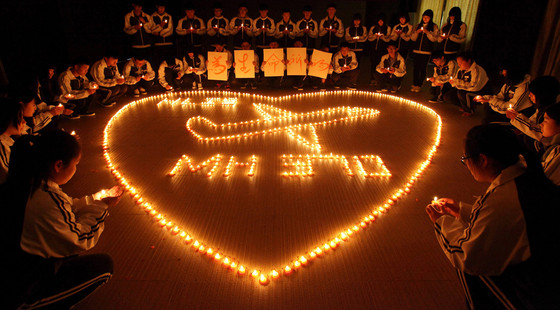
Memorial to Malaysian Airlines Flight 370.

Memorial to Malaysian Airlines Flight 370.

Where is that airplane, and why did it disappear? The mysterious loss of Malaysian Airlines Flight 370 continues to vex security and transportation officials, leaders of government and people of good will around the world. Recent reports suggest that the lost aircraft was airborne for several hours after contact was lost with it and that it had flown west over the Indian Ocean. The prospect of foul play, therefore, seems more ominous. For the passengers on the plane, what did they know what was happening to them and when did they know it? On 9/11, many passengers aboard the four hijacked airplanes were able to communicate with loved ones with their mobile phones before dying. We know that they knew. We don’t as yet have such evidence from Flight 370. At the same time, on this Shabbat Zakhor, we recall acts of terror carried out by violent enemies against our people. The ominous possibility that acts of terror in the skies claimed the lives of innocent people gives us the chills. Even if the fate of the aircraft was a result of mechanical failure, let’s reflect a bit further on what the men and women on board may have been thinking.

The prospect of facing certain death and reflecting on it over a period of hours or minutes is terrifying. On Yom Kippur in 1986, Rabbi Kenneth Berger addressed this very issue at Congregation Rodeph Shalom in Tampa. In a now famous sermon titled “Five Minutes to Live,” Rabbi Berger reflected on the seven astronauts of the Space Shuttle Challenger who perished in the disaster earlier that year. Evidence was found that the astronauts did not die in the explosion but when the capsule impacted the ocean waters. Rabbi Berger said, “For perhaps as much as five minutes, the astronauts were alive and conscious and yet knew that death was certain.”

Rabbi Berger then asked his congregation to consider the question: “What would you do if you had five minutes to live?” He challenged his congregation to live their lives as though they had five minutes left. Not in a cynical way by saying, “What’s the point?” But in a spiritual way; a way that will help us channel our direction. He spoke about serving God in those five minutes and expressing our love for our loved ones.

Less than three years later, in July 1989, Rabbi Berger was with his wife and two of his children on United Airlines flight 232 to Philadelphia. After the engines failed, the flight was forced to make an emergency landing.

In the crash landing 185 out of 285 passengers were killed, including Rabbi Berger and his wife, Aviva, while their children survived. During those moments as the plane was descending rapidly to an uncertain fate, Rabbi Berger probably thought about his own sermon.

On this Shabbat Zakhor, Erev Purim, we reflect on the fragility and preciousness of life. The mitzvah of remembrance is to remind us that innocent lives lost long ago are precious. We resolve to maintain the flame of memory in order to make meaning out of our lives. Why do we have Shabbat Zakhor before Purim? Wouldn’t it make sense to fold the themes of this Shabbat into the somber day of Yom Kippur?

It turns out, there is a strange nexus between Purim and Yom Kippur. Both holidays remind us to ask ourselves what we would do if we had five minutes to live. Various sources in our tradition highlight the connection between Purim and Yom Kippur.

The rabbis of the Midrash ask: “What was the good name that [Esther] earned for herself? That all the festivals may be nullified, but the days of Purim will never be nullified… Rabbi Eliezer says, Yom Kippur, too, will not be nullified. (Midrash – Yalkut Shimoni, Esther 944)

Furthermore, according to the Zohar, the Hebrew name for Yom Kippur — Yom KipPURIM — alludes to the similarity between these two seemingly dissimilar days. Yom KipPURIM [literally means] “a day that is like Purim.” It seems incongruous that a day of joyous revelry and a day of awesome introspection should be more similar to one another than any of the other festivals to one another. What is it about Purim and Yom Kippur that create this relationship?

As Rabbi Sharon Brous writes, “The reversibility of fortune, the capriciousness of life, is a message Purim shares with Yom Kippur…Yom Kippur compels us to reflect on the unavoidable uncertainty of our lives. But on Yom Kippur we dive into this terrifying reality with austerity, reflection and spiritual wakefulness, whereas on Purim we respond by celebrating, imbibing and masquerading.”

Yom Kippur and Purim ask the common question: “What would I do if I had five minutes to live?” Both holidays acknowledge the frailty and uncertainty of life. The answers offered by each holiday, however, seem diametrically opposed to each other.

Yet Yom Kippur is more than a day of somber reflection; it is a Yom Tov, a festival, when we celebrate being cleansed of sin. At the same time, Purim is more than a day of rowdy gluttony. Our tradition has bestowed us with mitzvot, commandments, to perform acts of generosity and community building on Purim: “Make them days of feasting and gladness and of mishloah manot (sending portions of food) one to another, and matanot l’evyonim (gifts to the poor)” (Esther 9:22). As Rabbi Brous writes, “We embrace the confusion and moral ambiguity of Purim with a renewed commitment to social transformation, responding to the mess of life by giving our family and friends sweet gifts and by giving generously to the poor. In other words, the only way to make sense of the absurd randomness of life and the social order is to honor the loving relationships that sustain us and work to address the imbalance of fortunes that leaves some with abundance and others with nothing. Mishloah manot and matanot l’evyonim come to reinforce that while we cannot control the world, we can control the way we live in it.”

When we give to others on Purim, we acknowledge our lack of control over our destinies. After all, life can change drastically in the span of just five minutes. Therefore, we must give generously today, for tomorrow, God forbid, we could be begging for a little spare change.

Three years before his death, Rabbi Berger had the foresight to remind himself and the broader community that life is not forever and that he only had a proverbial five minutes left.” The same is true for us.

On this Shabbat Zakhor, our thoughts are with the families of loved ones on Flight 370 who must be in unbearable pain. Let us resolve to make sure our leaders are vigilant against senseless acts of violence and terror. Let us also resolve to bring more love and kindness into the world.

We might not realize it yet, but we all only have five minutes left. The clock is ticking….