Tag Archives: TieBlog
18 Sep
Corn stalks represent the fall harvest, and they can also be used for skhakh, the roof of the Sukkah.

Corn stalks represent the fall harvest, and they can also be used for skhakh, the roof of the Sukkah.

On Sukkot, we dwell for seven days in a Sukkah, a fragile, temporary dwelling. It symbolizes the fragility and impermanence of life, yet is also a time to offer gratitude to God for the divine sheltering presence and the abundance that we are able to enjoy in this world. The roof of the Sukkah is called skhakh and is made of plants. During the day, it must provide more share than sun light, and during the night, one must be able to see the stars. Corn stalks, like the ones on my tie, are a popular form of skhakh where they are available.

#TieBlog #Nitzavim

29 Aug
"It is not in heaven"  (Deuteronomy 30:12)

“It is not in heaven” (Deuteronomy 30:12)

While human beings have acquired the ability to launch rockets and people into space and explore the heavens, Deuteronomy tells us that Torah–the totality of our received tradition from God–is “lo bashamayim hi,” “it is not in heaven” (Deuteronomy 30:12). This phrase has been understood that the Torah is not an esoteric document. It is meant for human beings in this world to explore, interpret and reinterpret. This verse plays a central role in one of the most famous passages in the Talmud, Bava Metzia 59b, in which Rabbi Eliezer is in a dispute with Rabbi Joshua and the majority of sages. Rabbi Eliezer performs miracles and even has a divine voice from the heavens call out that the law is in accordance with him. Rabbi Joshua, however, says “Lo bashamayim hi,” “[The Torah] is not in heaven. God laughs in response and says, “My children have defeated me.” The Torah is meant to be studied and reinterpreted in each generation.

#TieBlog #Devarim

11 Jul

image

“These are the words which Moses spoke to all Israel on this side of the Jordan in the wilderness, in the Arabah opposite the Red Sea, between Paran, and Tophel, and Laban, and Hazeroth, and Dizahab” (Deuteronomy 1:1).

When Moses is first called upon by God to lead the Israelites out of Egypt he tries to get out of the task by saying he can’t speak. Now, 40 years later, Moses delivers to the people a long succession of speeches that are compiled in the book of Devarim/Deuteronomy. Moses has found his groove as a speaker, and he spends the fifth book of the Torah reminding the people of their sacred mission. His facility with Devarim/ words inspires this week’s crossword-themed tie.

#TieBlog #Korach

6 Jun

imageimage

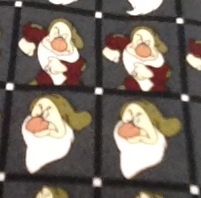
Korach is grumpy about something. This Levite is jealous of the power and prestige of his cousins Moses and Aaron and stages a rebellion. With an assist from God, the rebellion fails miserably, and Korach and his comrades are swallowed by the earth. A few years ago during a family trip to Disney World, in one of the shops I found this tie featuring Grumpy from Snow White and the Seven Dwarfs. It occurred to me that I coukd wear it for Parashat Korach whose namesake is the grumpiest person in the Torah. To be fair, Grumpy the Dwarf is not a sinister character; his name reflects more his disposition than his character. Still, one gets the sense Korach was an unhappy–and most especially grumpy person. Shabbat Shalom–and be happy!

#TieBlog #Behaalotekha

22 May

image

Parashat Behaalotekha begins with instructions to Aaron to light the lights of the Menorah in the Tabernacle. In addition, the haftarah (prophetic reading) is taken from Zechariah and contains the prophet’s vision of the Menorah. This same selection is repeated on Shabbat-Hanukkah. The text of the haftarah inspired the lyrics of Debbie Friedman’s classic song: “Not by might, and not by power. But by spirit alone shall we all live in peace.” May the light of the Menorah inspire all of us to such a vision.