
Love Finer Than Wine
Edited by Edward C. Bernstein
Foreword by Mike Kelly, author of The Bus on Jaffa Road
With gratitude to God, I am pleased to announce the publication of Love Finer Than Wine: The Writings of Matthew Eisenfeld and Sara Duker.
Love Finer Than Wine
Edited by Edward C. Bernstein
Foreword by Mike Kelly, author of The Bus on Jaffa Road
With gratitude to God, I am pleased to announce the publication of Love Finer Than Wine: The Writings of Matthew Eisenfeld and Sara Duker.
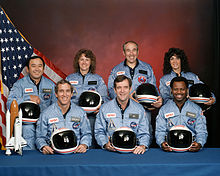
Remember the Challenger
Many of us who have been in Israel in the spring are familiar with the peculiar transition Israeli society undergoes from Yom HaZikaron, a somber day to remember Israel’s fallen soldiers, to Yom Haatzmaut, Israel’s Independence Day that is always an exuberant celebration. There is nothing like this transition that encapsulates the story of the Jewish people. This week I was reminded of a sequence of events thirty years that was the exact opposite. Exultant joy turned into intense national mourning.
Thirty years ago, I was a high school student in Chicago. The victory of the Chicago Bears in Superbowl XX for their first (and still only) Superbowl championship was a momentous and joyous occasion for everyone in the city. That was January 26, 1986. The next day, a typically frigid January day, a boisterous rally celebrated the Bears as players hoisted the Superbowl trophy in Daley Plaza in front of the giant Picasso sculpture. Then, tragedy struck, and joy turned to sorrow.
The next day, January 28, was the 25th Space Shuttle mission. Seven astronauts were on board the Challenger orbiter. They included Christa McAuliffe, a school teacher who had answered President Reagan’s call to be the first school teacher space who is now memorialized by the middle school in our neighborhood bearing her name. The crew also included Judith Resnick, the first Jew in space. She had a traditional Conservative upbringing in Akron, OH. Since I served eight years as a rabbi in nearby Cleveland, I can attest that her loss on the Challenger is still felt profoundly by the Jewish community in Northeast Ohio. This week, we also recall the other crew members: Gregory Jarvis; Francis R. (Dick) Scobee, mission commander; Ronald E. McNair; Mike J. Smith, pilot; and Ellison S. Onizuka.
This week’s Torah portion, Yitro, contains an interstellar, “other worldly” experience: the Israelites encounter God at Mt. Sinai and receive Aseret Ha-Dibrot, the Ten Commandments. The text tells us that their senses were so overloaded they did not want to encounter God directly. They wanted Moses to be their emissary and communicate with God on their behalf. It’s like with the astronauts only a select few who pass the numerous physical and psychological tests are deemed fit to leave the confines of the earth. And then, as we learned from Challenger and later Columbia, sometimes even these extraordinary people don’t make it.
Amidst all the thunder and lightning at Sinai, the rabbis wonder what the Israelites actually heard at Sinai before their senses shut down. Some say they heard God proclaim all ten utterances. Others say that God spoke only the first two, declared in the divine ”Anochi,” “I,” and that Moses added the remaining eight in which God is referred to in the third person. One Hasidic master taught that the Israelites heard only the first letter of the first word (the alef in anokhi). Alef is a silent letter, yet from this letter, the Israelites intuitively understood the rest (Menachem Mendel of Rymanov).
In recalling the seven Challenger astronauts we recall seven lives whom most of us knew only from a distance. And yet, we all intuitively discern the profound level of loss of these outstanding individuals.
In returning to Judy Resnick, rabbinic colleagues of mine were reminiscing online about her Jewish legacy. Rabbi Reuven Hammer, former President of the Rabbinical Assembly who served for several years as rabbi of Beth El in Akron, Ohio, remembers Judy who came to shul regularly as a youngster. Though her career brought her away from active religious involvement as an adult, she held her roots and heritage close to her heart. It was recalled that shortly before her first launch in 1984 she was in Akron and paid a visit to Rabbi Abe Feffer , then serving as rabbi of Beth El. She asked him to recite tefillot with her in the chapel as part of her preparations for the launch. In his eulogy after her death, Rabbi Feffer addressed the feeling he had heard voiced by some people that Resnick was “somewhat distant from our people.” He said, “Frankly, when a young American astronaut still calls her father ‘Abba’ and her grandmother ‘Bubbie,’ that astronaut is not too far from our people.
Most of us probably didn’t know Judy Resnick, and yet we did. It was like the Israelites hearing an aleph at Mount Sinai. We got it.
In the aftermath of the Challenger disaster, another Conservative rabbi, Kenneth Berger of Congregation Rodeph Shalom in Tampa, mused on what the astronauts themselves might have been thinking in their final moments. How did they contemplate the aleph? He gave a prescient sermon the following Yom Kippur that became a viral sensation long before the Internet entered our lives. In the sermon titled “Five Minutes to Live,” Rabbi Berger reflected on the seven astronauts on Challenger who perished earlier that year. Evidence was found that the astronauts did not die in the explosion but when the capsule impacted the ocean waters. Rabbi Berger said, “For perhaps as much as five minutes, the astronauts were alive and conscious and yet knew that death was certain.”
Rabbi Berger then asked his congregation to consider the question: “What would you do if you had five minutes to live?” He challenged his congregation to live their lives as though they had five minutes left. Not in a cynical way by saying, “What’s the point?” But in a spiritual way; a way that will help us channel our direction. He spoke about serving God in those five minutes and expressing our love for our loved ones.
Less than three years later, in July 1989, Rabbi Berger was with his wife and two of his children on United Airlines flight 232 to Philadelphia. After the engines failed, the flight was forced to make an emergency landing.
In the crash landing 185 out of 285 passengers were killed, including Rabbi Berger and his wife, Aviva, while their children survived. During those moments as the plane was descending rapidly to an uncertain fate, I imagine that Rabbi Berger thought about his own sermon.
The aleph in Hebrew makes no sound, and yet when we listen intently to it, it contains all the wisdom we need to live as a decent human being. It is a silent sound that says it all. The aleph introduces the Ten Commandments and stands for the values of our tradition that are so precious. The aleph challenges us to live our lives as if we had five minutes to live. As we remember the astronauts who died 30 years ago, let us honor their legacy by living our lives as if we had only five minutes to live and fill each moment with goodness and kindness. May the memory of the astronauts be for a blessing.

15 Seven days shall you eat unleavened bread; the first day you shall put away leaven out of your houses; for whoever eats leavened bread from the first day until the seventh day, that soul shall be cut off from Israel.
(Exodus 12:15).
When people see me wear this tie in the winter they often fret that Passover is around the corner and that they have to start preparing their kitchens to be kosher for Passover, an arduous rite of spring. Have no fear, that’s still three months away. However, our Torah reading this week, Parashat Bo, describes the final three of the ten plagues. As a prelude to the climactic tenth plague, the slaying of the first born, the Torah describes the ritual of the Passover sacrifice that becomes the basis of the Passover Seder observed to this day. The roasted lamb must be eaten with matzah (unleavened bread) and maror (bitter herbs). The Passover rituals are designed to spark discussion about the significance of the Exodus from Egypt in Jewish consciousness. Even if it’s not spring, it’s never to early to engage in these important teachings.
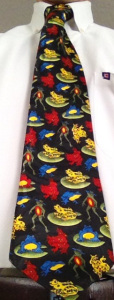 “Frogs here, Frogs there. Frogs were jumping everywhere.”
Many of us learned the song in pre-school as we were preparing for our Passover Seders:
One morning when Pharaoh awoke in his bed
There were frogs on his pillow and frogs on his head.
Frogs on his nose and frogs on his toes,
Frog here, frogs there, frogs were jumping everywhere.
This week in Parashat Va’era, we read about the first seven of ten plagues that God sent to Egypt to pressure Pharaoh to let the Israelites go free. With the children’s song about the frogs, it’s easy to make light of the plagues and even laugh about them. However, at the Seder we remind ourselves not to rejoice by removing a drop of wine from our wine glasses as we recite each plague. We rejoice that the plagues led to freedom for an enslaved people; we do not rejoice…
View original post 36 more words

The Jedi Rabbi lights the Hanukkah candles.
Here is Temple Torat Emet’s new intergalactic Hanukkah-Star Wars video, May The Light Be With You.
 “The Little Rascals” get into mischief, and so do the sons of Jacob in this week’s Torah portion.
In Parashat Vayeshev, we meet Joseph, the spoiled brat and favorite son of Jacob. He torments his eleven brothers with his dreams in which he predicts his dominance over them. They can’t take it any more. In a puzzling act of parenting, Jacob sends Joseph out one day to find his brothers and inquire after their welfare. They plot to kill him but relent when Judah sells him into slavery instead. Joseph goes down to Egypt and eventually achieves a position of immense power. One can only imagine what living in a house of twelve sons must have been like on a day-to-day basis. The mischief of the “Little Rascals,” may offer some clue into the brothers’ lives when they were young boys.
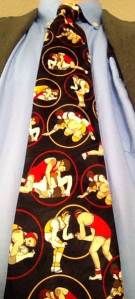
Jacob wrestles with a mysterious being in Parashat Vayishlach and is renamed Yisrael.
Parashat Vayishlah presents the climax in Jacob’s journey from a trickster youth who gets his way through deception to a mature adult who faces life’s challenges with integrity. He is about to confront his estranged brother Esau for the first time in 20 years. He fears for his life as he believes Esau is still angry over being cheated out of his birthright. The night before meeting Esau, Jacob encounters a mysterious being on the banks of the Jabbok and they wrestle all night. Towards dawn, Jacob prevails but the sparring partner strikes him in his hip and causes permanent injury. Jacob emerges triumphant but wounded. He is renamed Yisrael- the one who wrestles with God and man and prevails. Later (33:18), Jacob is described as “Shalem,” whole or at peace. Even though Jacob is hurt in a wrestling bout, he is a much more whole person for finding within him the integrity to repair his relationship with his brother.

Jacob’s Ladder
In Parashat Vayetze, Jacob dreams of a ladder with angels ascending and descending between heaven and earth. They next morning, Jacob awakes and says, “God was in this place, and I did not even know it.” Herein lies a subtle but clear message that while other faith traditions view heavenly bliss as the ultimate religious achievement, for Judaism, the ultimate religious expression is bringing a bit of heaven onto earth.
Year after year around Thanksgiving time, Hollywood turns up the heat. As we enter the winter holiday season, our country is bombarded by movies that are meant to be blockbusters. I am always amazed at the extent to which these blockbuster movies are adventures or fantasies, movies that force us to take a leap of faith beyond reality. The most successful films become franchises that repeat over and over again. Right now, pop culture is captivated by 007, the 24th film in the James Bond franchise. Next month, after much hoopla, the seventh Star Wars film will hit the silver screen
Why do blockbuster fantasy movies always take the country by storm? Certainly the popularity of familiar storylines and identity with characters help. Special effects also go a long way towards making them entertaining spectacles. But the key reason people turn to film or any dramatic media, is the escape it offers from the harsh realities of our world. What could be more comforting than the opening lines of the signature song of Disney’s classic, Pinocchio: “When you wish upon a star/makes no difference who you are/anything your heart desires/will come to you.” If only the world were so simple. Whether in print or on the screen, we turn to fantasy as an escape from the confusing world in which we live, a world fraught with evil and destruction.
Wouldn’t it be nice if somehow by magic we could bring back to life those who died in terrorist attacks in Israel in recent weeks? Imagine if we could use the Force to summon Israel’s enemies to a bargaining table to finalize peace in the region. Alas, we are not able to use the Force or summon any kind of magical powers to rid the world of its problems. Our world demands more of us.
At first glance, today’s Torah reading seems to confirm the “When you wish upon a star” thinking that we find in many films. The essential point of conflict in the story of Jacob and Esau is who will get their father’s blessing. When Jacob, disguised as Esau, stands before Isaac, he receives Isaac’s innermost blessing:
כח וְיִֽתֶּן־לְךָ הָֽאֱלֹהִים מִטַּל הַשָּׁמַיִם וּמִשְׁמַנֵּי הָאָרֶץ וְרֹב דָּגָן וְתִירֽשׁ:
May God give you of the dew of heaven and the fat of the earth, abundance of new grain and wine. Let peoples serve you, and nations bow to you; Be master over your brothers, and let your mother’s sons bow to you. Cursed be they who curse you, blessed be they who bless you.” (27:28-29) One might think that this blessing is a kind of hocus pocus incantation, like one would read in J.R.R. Tolkein or J.K. Rowling, two authors whose works also were adapted into blockbuster film serials. In fact, it is possible that Esau also believes that the blessing has a magical quality when he learns what happened and lets out a loud and bitter cry. Esau’s interest in the blessing was its material benefit. In the end, Esau receives from Isaac a very similar blessing of his own promising him the fat of the earth and the dew of heaven above.
Blessings are not magic, however. Even in their most materialistic forms, the purpose of blessings is to acknowledge the ultimate power of God in the world. Elsewhere, the Torah explicitly prohibits practices of magic and divination that seek to undermine God’s authority over all creation. Isaac is more sophisticated than we often give him credit for in recognizing the distinction between a blessing and a magical incantation. This is most evident at the end of the parasha when Isaac blesses Jacob as he is about to flee from Esau’s wrath.
Isaac says: May El Shaddai bless you, make you fertile and numerous, so that you become an assembly of peoples. May He grant the blessing of Abraham to you and your offspring, that you may possess the land where you are sojourning, which God assigned to Abraham.” (28:3-4)
Nechama Leibowitz, one of the great Torah scholars of the 20th century, contrasts the blessing originally intended for Esau and the one Jacob received in his own right. On the one hand, Esau was promised abundance, fatness, power and dominion-material blessings. Jacob, however, is charged with the Abrahamic mission, which is essentially spiritual. It demands responsibility on the part of Jacob in addition to the promise it offers him.
In a twist on Shakespeare, Abraham Joshua Heschel writes: “To be or not to be is not the question. The vital question is: how to be or not to be.” Heschel further writes: “Man in prayer does not seek to impose his will upon God; he seeks to impose God’s will and mercy upon himself. Prayer is necessary to make us aware of our failures, backsliding, transgressions, sins.”
Jacob in his youth is far from perfect, and the Bible does not try to hide his faults. However, he has a greater sense of the ultimate purpose of prayer. By the end of Parashat Toledot, Isaac realizes that prayer is not merely a shopping list one sends to God, but a means to bring Godliness into the world and that the person to do that is Jacob. More than the other patriarchs, Jacob shows the greatest amount of growth. He makes mistakes and pays dearly for them. Ultimately, though, it is Jacob who recognizes the power of prayer to transform himself, as we shall see in the coming weeks.
In many fantasies, there are forces of good and forces of evil. The characters on either side of the divide lack the ability to change. The struggle between the two, therefore, is not a struggle over the hearts and minds of humanity. Rather, it is a pure power struggle devoid of moral implications. It is a struggle over the outside world and material objects. The victor is the one who comes up with the stronger magic tricks.
The Jewish understanding, on the other hand, is that we all have free will to choose between good and evil. Our world is not decided by the
wave of a magic wand but by how we treat one another. When we pray, we have the potential to find the strength within ourselves to make ourselves and the world better.
May the implicit lesson of Parashat Toledot and the readings of the coming weeks inspire us to approach prayer as a vehicle to improving ourselves and the world around us. Amen.
 Often Parashat Toldot corresponds with Thanksgiving. This year, they’re a few weeks apart. Nevertheless, the turkeys on this week’s tie represent the prominent role of food in the drama of Jacob and Esau.
Food and sustenance play a prominent role in Parashat Toledot. Jacob tricks Esau out of his birthright for a bowl of stew. He later deceives his blind father by wearing hairy skins to appear like his brother as if he had just returned from a hunt. His mother Rebecca prepares the purported game for Jacob to present to Isaac and receive in return his innermost blessing intended for the first born. In between these two narratives centered around food, we learn that Isaac reclaims the wells that his father had dug in Canaan. The family legacy cannot continue without sustenance from water, nor can it continue without nourishment from food. Often Parashat Toldot corresponds with Thanksgiving…
View original post 27 more words
 From Huffington Post
 Rabbi Ed Bernstein