Archive | Uncategorized RSS feed for this section

#TieBlog #ShabbatHanukkah #Mikketz

19 Dec
Dreidel tie for Hanukkah

Dreidel tie for Hanukkah

Heading into Shabbat Hanukkah, #TieBlog proposes a connection between this tie and Parashat Mikketz. Joseph’s life has been like a game of dreidel. He landed on some hard times and is lying forgotten in an Egyptian jail. Then his fortunes turn dramatically when he interprets Pharaoh’s dreams and is appointed viceroy of Egypt. He saves the people from starvation and ultimately his own family as well. In the musical “Joseph and the Amazing Technicolor Dreamcoat,” Joseph says upon his new appointment: “Anyone from anywhere can make it if they get a lucky break!”

Yes, the game of dreidel is a game of chance and luck. At the same time, an important message of Hanukkah is that people have to make miracles happen. The rabbinic legend of Hanukkah roots the festival in the miracle of oil: when they were cleaning up the desecrated Temple, the Maccabees found only enough oil to last for one day, yet it burned for eight days. We often overlook the important human elements of this miracle. Someone at some point had to crush olives in order to extract oil. Some lonely kohen (priest) had to pour oil into a jar, and perhaps another had the foresight to hide it before the Greeks desecrated the Temple.

Similarly, the Joseph story in the Torah is the most human story in the Bible. God is not an active character in the narrative. All of the events are shaped by human action. And yet, at key junctures, Joseph acknowledges God’s guiding force (45:5).

As much as life often seems random, like the result of a dreidel spin, we are in fact the authors of our own destiny. One of the great miracles of life is that God grants humans free will. An even greater miracle is when we channel that free will to do good.

PS–Be sure to watch and share my music video “Chanukah Opens Doors.

#ChanukahOpensDoors (parody)

14 Dec

Chanukah Opens Doors

Chanukah Opens Doors


Presenting: “Chanukah Opens Doors,” a musical Chanukah greeting from Temple Torat Emet, inspired by “Love Is An Open Door” in Disney’s “Frozen.” A joyous Chanukah to all. (Don’t click on picture, click here for video).

From Fear to Trust

5 Dec
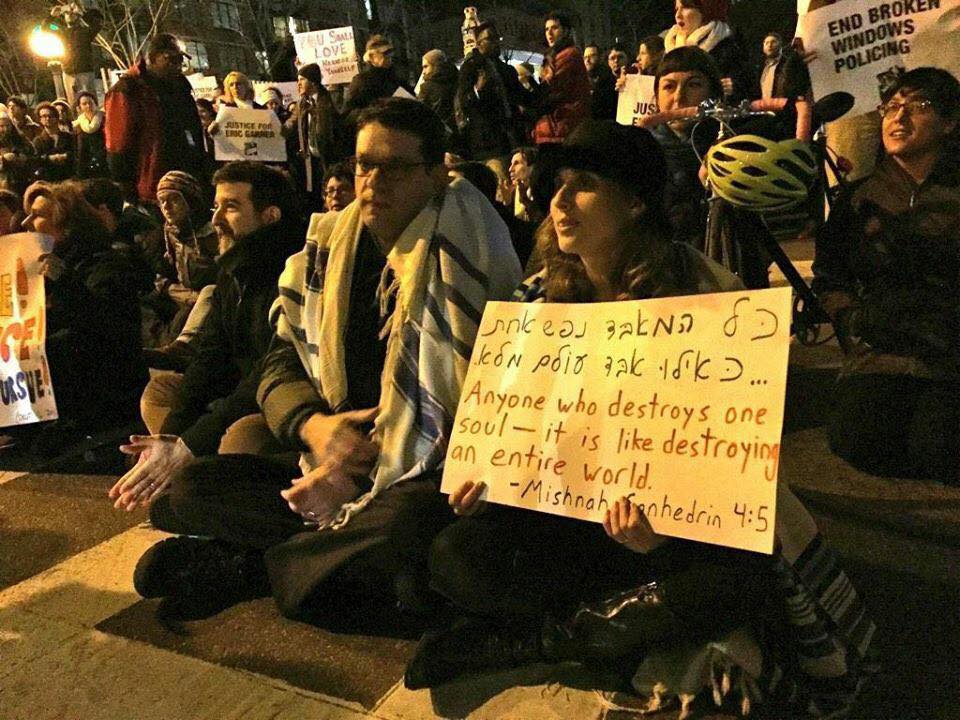
Rabbis in New York protesting non-indictment of NYPD officer implicated in Eric Garner death

Rabbis in New York protesting non-indictment of NYPD officer implicated in Eric Garner death

Johnny Carson, the late comedian and long-time host of the Tonight Show, began his career on a TV game show called “Who Do You Trust.”

I think about the name of that show today only because of a pervasive erosion of trust in our country. And it’s not funny. Not in the least.

Within the span of a week, grand juries in Ferguson, MO, and Staten Island, NY, declined to indict white police officers who were alleged to have committed police brutality in killing African American men. I don’t wish to make the case that either Michael Brown in Ferguson or Eric Garner in New York were saints. I also don’t wish to implicate all white police officers as racist hooligans, when the vast majority joined the force to serve and protect society, and they generally do. Yet I can’t help but wonder what would have happened in identical circumstances if either Michael Brown or Eric Garner was white. Probably nothing.

On a day to day basis, I’m sure there are countless examples of law enforcement officers doing their job in protecting our community in ways that don’t make the news. At the same time, to a casual observer, such as me, something seems to be broken in our law enforcement system. Our nation thrives as a nation of justice, and one of the pillars of a just society is trust. One of the greatest threats to trust is fear, particularly fear of people who are different. Fear of the other has deep roots in civilization, even in Parashat Vayishlach.

Our Torah reading this week contains an ugly, painful story that we don’t learn in Hebrew School. It is often referred to as the “Rape of Dinah.” However, it really should be known as the Massacre of Shechem. It is not at all clear that Dinah was raped; in fact, as depicted in Anita Diament’s novel, “The Red Tent,” her relationship with Shechem may have been completely consensual and loving.  Shechem goes to Dinah’s family and says he will pay any bride price for the right to take Dinah as his wife. The brothers, presumably all of them at first, issue the demand that Shechem and every other male in their town get circumcised. Lo and behold, Shechem and his father Hamor agree to this condition. All the males are circumcised. Then Shimon and Levi unleash unthinkable terror. While all the males of the town are recovering from their circumcisions, they massacre them all. The Bible does not whitewash our ancestors; this story, however, puts on full display the capacity among our ancestors for outright evil. When our fear of the ‘other’ is so great, we are at risk of committing terrible violence or tolerating the same from others in the name of justice.

I am not suggesting that Shimon and Levi’s premeditated massacre of innocents is the same as the alleged police brutality in Ferguson and New York. Police officers argue that they face great pressure in the line of duty and the heat of the moment in their efforts to protect society. However, the common threads are fear and mistrust.

With a great sense of despair across the country, I heard a glimmer of hope in an interview on NPR  with Constance Rice, a prominent civil rights attorney. She became known in the 1990s for, as she puts it, going to war with the Los Angeles Police Department.

Rice filed lawsuits against the department, mainly over their treatment of minorities in underprivileged communities. But in her interview, she bemoaned her initial tactics. Belligerence was breeding only more hostility and fear.

After initially battling the LAPD, and specifically captain Charlie Beck, who is now LA’s police chief, Rice changed tactics and found ways to work with the department. They worked together to reform the department and established trust.

Some of that change included LAPD officers going into housing projects to set up youth sports programs and health screenings, things that made people’s lives better and brought police and predominantly black communities closer together.

Rice described interviewing over 900 police officers and was surprised by the extent to which they opened up to her, as if in a therapy session:

“They would say things like, “Ms. Rice I’m scared of black men. Black men terrify me. I’m really scared of them. Ms. Rice, you know black men who come out of prison, they’ve got great hulk strength and I’m afraid they’re going to kill me. Ms. Rice, can you teach me how not to be afraid of black men.” I mean this [comes from] cops who are 6’4″. You know, the cop in Ferguson was 6’4″ talking about he was terrified. But when cops are scared, they kill and they do things that don’t make sense to you and me.”

On whether or not racism plays a factor in police force:

“[The police officer] doesn’t feel like it’s racism, [but] [T]he black community experiences it as racism, that’s very clear. So what I’m saying is that for people who have to be in the business of solving this dilemma you have to be able to step into the frightened tennis shoes of black kids; black male kids in particular. You have to be able to step into the combat boots and scared cops, and racist cops, and cruel cops, and good cops. You have to be able to distinguish between all of those human experiences and bring them together. On a single platform of we’re going to solve this by empathizing. We’re going to solve it with compassion and we’re going to solve it with common sense.”

On whether improving life in poor neighborhoods causes police to be less fearful:

“Not only does it cause cops to be less fearful, it causes the community to embrace them. I have taken a group of 50 cops and the chief (Charlie) Beck let me train them. I trained them in what I community partnership policing. The first thing I tell these cops is that you are not in the arrest business; you are in the trust business. We are going to train you in Public Trust Policing. It goes beyond community policing. What it does is it puts police in a position of helping a community solve its problems. These cops come into the black housing projects and they said to these populations who hate them “We know you hate us, but we’re here to serve. We’re going to win your trust.””

Our nation has a lot of work to do to rebuild trust and overcome fear of the other.  Throughout the centuries since the time of the Torah we find that fear of the other brings out the worst in people. It was true for Shimon and Levi, and it is true on the streets of our cities today.

The Prophet Zechariah says (8:16): Dabru emet ish et re’eyhu emet u’mishpat shalomshiftu b’shaareychem—Speak everyone the truth to one another; execute the judgment of truth and peace in your gates; and let none of you devise evil in your hearts against your neighbor.

May the prophet’s words inspire us to reimagine our society not rooted in fear of the other but in emet and shalom, truth and peace and inherent trust in one another.

“The Roar of the Cat Rabbi” now online

5 Dec
"Keeping Faith in Rabbis: A Community Conversation on Rabbinical Education," edited by Rabbi Hayim Herring and Ellie Roscher, launched on December 1.

“Keeping Faith in Rabbis: A Community Conversation on Rabbinical Education,” edited by Rabbi Hayim Herring and Ellie Roscher, launched on December 1.

My essay “The Roar of the Cat Rabbi: The Vital Role of Introverts in the Congregational Rabbinate” is now posted on the “Keeping Faith in Rabbis” website as a sample chapter. The book is also available through Amazon in paperback and on Kindle.

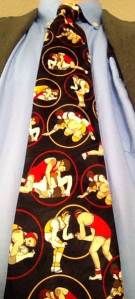
#TieBlog #Vayishlach #JacobWrestling

5 Dec

Rabbi Ed Bernstein

Jacob wrestles with a mysterious being in Parashat Vayishlach and is renamed Yisrael. Jacob wrestles with a mysterious being in Parashat Vayishlah and is renamed Yisrael.

Parashat Vayishlah presents the climax in Jacob’s journey from a trickster youth who gets his way through deception to a mature adult who faces life’s challenges with integrity. He is about to confront his estranged brother Esau for the first time in 20 years. He fears for his life as he believes Esau is still angry over being cheated out of his birthright. The night before meeting Esau, Jacob encounters a mysterious being on the banks of the Jabbok and they wrestle all night. Towards dawn, Jacob prevails but the sparring partner strikes him in his hip and causes permanent injury. Jacob emerges triumphant but wounded. He is renamed Yisrael- the one who wrestles with God and man and prevails. Later (33:18), Jacob is described as “Shalem,” whole or at peace. Even though Jacob is hurt in…

View original post 23 more words

An essay in “Keeping Faith in Rabbis”

2 Dec
"Keeping Faith in Rabbis: A Community Conversation on Rabbinical Education," edited by Rabbi Hayim Herring and Ellie Roscher, launched on December 1.

“Keeping Faith in Rabbis: A Community Conversation on Rabbinical Education,” edited by Rabbi Hayim Herring and Ellie Roscher, launched on December 1.

I’m pleased to announce the publication of my essay, “The Roar of the Cat Rabbi: The Vital Role of Introverts in the Congregational Rabbinate” as part of the book Keeping Faith in Rabbis: A Community Conversation on Rabbinical Education, edited by Rabbi Hayim Herring and Ellie Roscher. In my essay, I argue against a tired metaphor from 20 years ago that said the pulpit rabbinate was only for “dog rabbis,” or extroverts, while “cat rabbis,” or introverts, should look for work elsewhere. I reject this false dichotomy and draw upon the latest in groundbreaking social science research and my own 15 years serving synagogues. I attempt to show that both introverts and extroverts have important skills to apply to the congregational rabbinate and have the capacity to stretch to incorporate new skills while remaining true to their authentic selves. I’m honored that my essay is included in this volume along with 30 other essays from distinguished thought leaders in the Amerian Jewish Community.

Here’s how the editors describe the volume: Keeping Faith in Rabbis: A Community Conversation on Rabbinical Education is an original book of essays by rabbis, academics and lay leaders who explore the question, “What goes into the making of a 21st Century rabbinical leader?” Keeping Faith in Rabbis does not prescribe formulas for rabbinical education. Rather, it is an intentionally curated conversation across ideological boundaries that both celebrates the work of rabbis and suggests new paradigms of rabbinical education and leadership.

Keeping Faith in Rabbis is available from Avenida Books and on Amazon (Print edition $17.95 | Kindle edition $9.99). If you’re interested in Jewish community or in questions of where the Jewish future may lie, this book is a terrific resource — and also hopefully a conversation-starter, both in our communities and in other religious communities where the questions raised in this book will resonate. Pick up a copy today!

#TieBlog #Vayetze #Jacob’s Ladder

28 Nov

In Parashat Vayetze, Jacob dreams of a ladder with angels ascending and descending between heaven and earth. They next morning, Jacob awakes and says, “God was in this place, and I did not even know it.” Herein lies a subtle but clear message that while other faith traditions view heavenly bliss as the ultimate religious achievement, for Judaism,  the ultimate religious expression is bringing a bit of heaven onto earth.

Rabbi Ed Bernstein

Jacob's Ladder Jacob’s Ladder

A stairway to heaven that could very well be Jacob’s ladder.

View original post

#TieBlog #Toledot 2014

21 Nov
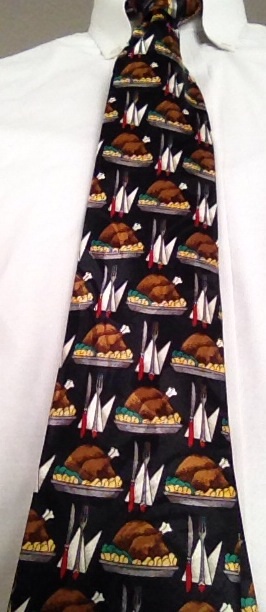
Often Parashat Toldot corresponds with Thanksgiving. The turkeys on this week's tie represent the prominent role of food in the drama of Jacob and Esau.

Often Parashat Toldot corresponds with Thanksgiving. The turkeys on this week’s tie represent the prominent role of food in the drama of Jacob and Esau.


Food and sustenance play a prominent role in Parashat Toledot. Jacob tricks Esau out of his birthright for a bowl of stew. He later deceives his blind father by wearing hairy skins to appear like his brother as if he had just returned from a hunt. His mother Rebecca prepares the purported game for Jacob to present to Isaac and receive in return his innermost blessing intended for the first born. In between these two narratives centered around food, we learn that Isaac reclaims the wells that his father had dug in Canaan. The family legacy cannot continue without sustenance from water, nor can it continue without nourishment from food. Often Parashat Toldot corresponds with Thanksgiving. This year, we read Toledot a few days before Thanksgiving. The turkeys on this week’s tie represent the prominent role of food in the drama of Jacob and Esau.

A true hero

14 Nov
Walter Payton (1953-1999) meeting fans at the Chicago Auto Show.

Walter Payton (1953-1999) meeting fans at the Chicago Auto Show.

This blog post is dedicated to the memory of Robert Dorfman, Z”L.

This week, a lifelong friend of mine lost his father after a prolonged illness. When I spoke to my friend this week I shared a favorite memory, probably when we were nine- or ten-years-old, when his father took us to the Chicago Auto Show. We weren’t interested in the cars. We couldn’t drive, after all. Our focus was to make a beeline for the Buick section for the meet-and-greet with Walter Payton, the legendary running back for the Chicago Bears. He was then in the prime of his career.  Payton shattered numerous records in his Hall of Fame career and helped lead the Bears to a Superbowl victory in 1986. He retired as one of the great legends of sports. A soft-spoken, kind man by nature, he was known by fans as Sweetness. Tragically, Payton died of liver cancer in 1999 at the age of 46.


Three years ago, I read a gripping biography about Walter Payton by Jeff Pearlman , “Sweetness: The Enigmatic Life of Walter Payton.” Through meticulous reporting, Pearlman uncovers shocking truths about Payton. He was a womanizer and fathered a child out of wedlock whom he never met. He was addicted to pain killers, which the author reports is linked to liver disease. He was deeply depressed. He was a reckless driver. Despite all of these things, he maintained a pristine public image as a model husband, father and citizen and generous philanthropist. Pearlman’s book attempts to uncover the enigma of a man who went out of his way to visit sick children in the hospital and neglected his family.


When Pearlman’s book was published, it was criticized by those who sought to preserve Payton’s pristine, almost god-like image. I disagree. As a Walter Payton fan, Jeff Pearlman did us a great service by illustrating a star athlete as a flawed human being. Pearlman describes how Payton, late in life, thought he was a candidate for a liver transplant. He actually wasn’t. But his last act of communal service was to encourage people to become organ donors. The number of donors in Illinois multiplied exponentially as a result of Payton’s plea. He redeemed himself and brought great meaning to his life through his actions in his final days. Pearlman’s work on Payton anticipates the mountain of evidence that has emerged in the past year or so pointing to the problems endemic to the game of football itself and the toll it takes on those who play the game and our society, which pays big bucks to watch it. Pearlman shows that Walter Payton’s heroism grew out of his humanity, not the touchdowns he scored.


Like Pearlman’s assessment of Walter Payton, the Torah describes the Biblical heroes in human terms. They did great things, to be sure, but they were flawed like you and me. For instance, the Torah highlights Abraham’s great achievements such as discovering monotheism and bringing justice and morality into the world. At the same time, the Torah does not hide Abraham’s human faults. He passes his wife off as his sister not once, but twice, saving his life while risking hers. He throws Hagar and Ishamael out of the house into the desert to die. They are only saved by divine intervention. He fails to protest God’s final test and nearly sacrifices his son Isaac. Isaac is traumatized, perhaps even blinded by the event, and never speaks with Abraham again. He definitely has his human flaws.


However, Abraham is still a hero. A clue to his greatness is that he is content with his lot. As Abraham’s days draw to a close we read v’Adonai berach et Avraham bakol, God blessed Abraham with all things, (Gen. 24:1). Later, as Abraham is about to die, we’re told that when he died he was b’seivah tovah zaken v’saveiah—a good ripe age, old and contented (25:8). The text tells us that Isaac and Ishmael come together to bury their father. The midrash imagines that Abraham reconciled with his sons and the two of them with each other before he died. With this final act of teshuvah, Abraham dies content that there is peace in his family, and his legacy will continue. Abraham lives a full life with many successes and a number of mistakes. Through it all, he recognizes the mistakes and reconciles with his sons, or at least brings about their reconciliation with each other.


Abraham’s long life in which he died old and satisfied stands in contrast to football players in our era. The best of the best are paid millions of dollars, but they often are scarred with physical and emotional pain and truncated lives. Others barely last a year or two, maybe three in the NFL, after which they lack direction for the rest of their lives. The narcissistic behavior by some players who assault and rape women reflects on men who are not happy but who are angry, entitled spoiled brats whose bullying of others has been tolerated because they can clobber other players and score touchdowns.


As I reflect on Pearlman’s reporting on Walter Payton three years ago, I see it now as a prelude to the mountain of stories in the last year or so linking the multi-billion dollar football industry to a host of problems such as early onset dementia, violent crimes committed by active and former players and severe depression and suicide. This season alone three high school students from around the country died from head injuries sustained while playing. These trends should give us pause to assess our values as a society. What does it mean to earn the status of hero? When we tune into a football game on TV, and the broadcast replays both the pictures and sounds of a devastating tackle, we bear responsibility. The networks are playing to primal desires within us to watch other human beings hurt each other for sport. Our society is paying a price for our indulgence of our modern day gladiators as heroes.


For too long our nation has looked askance when former football players have developed a host of physical and mental problems from years of getting their brains bashed in hundreds of times per day. Former NFL players live on average 20 years less than normal male life expectancy in our country. Among the 1985 Chicago Bears who won the Superbowl, Walter Payton died of liver disease, likely spurred by addiction to pain killers; Dave Duerson, All Pro safety, committed suicide at the age of 50; Quarterback Jim McMahon now suffers from dementia and is a lead plaintiff in the class-action lawsuit against the NFL.


The problems go much deeper than former players’ health, unfortunately, as discussed in Steve Almond’s new book “Against Football: One Fan’s Reluctant Manifesto.” Because of our indulgence of football, school districts struggle for funds while municipalities build lavish stadiums often with significant tax breaks for the owners. Universities that make billions of dollars from football have tolerated star football players raping women. Only now are we starting to wake up to the deep systemic problems in society at large that this violent game has bestowed upon our society.


Walter Payton was no Abraham. He certainly was not blessed to live out the fullness of his years. However, at the end of his life he overcame his many human flaws and inspired others to do good. His final act of kindness saved many lives, and for that he is a hero. His legacy should be reexamined to bring safety and common sense into American sports and to remind us all of what truly matters.


#TieBlog #Vayera #TheScream

6 Nov

Rabbi Ed Bernstein

Edvard Munch's "The Scream" has multiple connections to Parashat Vayera. Edvard Munch’s “The Scream” has multiple connections to Parashat Vayera.

When I found a tie with Edvard Munch’s “The Scream,” it was clear to me that it would be perfect for Parashat Vayera. The question is what specific connection or “tie-in” it has. The next question is what kind of a scream is represented? Is it a scream of terror or a scream of joy? If the latter, perhaps it’s the aged Sarah expressing her shock that she is going to give birth to a son. On the terror side there are multiple options. It could be Abraham hearing about God’s planned destruction of Sodom and Amorah and his righteous indignation that the just might perish with the wicked. It could be the wife of Lot gazing upon Sodom and Amorah as they burn from fire and brimstone. She turns into a pillar of salt from the shock. Or…

View original post 36 more words