In Parashat Vayeshev, we meet Joseph, the spoiled brat and favorite son of Jacob. He torments his eleven brothers with his dreams in which he predicts his dominance over them. They can’t take it any more. In a puzzling act of parenting, Jacob sends Joseph out one day to find his brothers and inquire after their welfare. They plot to kill him but relent when Judah sells him into slavery instead. Joseph goes down to Egypt and eventually achieves a position of immense power. One can only imagine what living in a house of twelve sons must have been like on a day-to-day basis. The mischief of the “Little Rascals,” may offer some clue into the brothers’ lives when they were young boys.
#TieBlog #Vayishlach #JacobWrestling
14 NovParashat Vayishlah presents the climax in Jacob’s journey from a trickster youth who gets his way through deception to a mature adult who faces life’s challenges with integrity. He is about to confront his estranged brother Esau for the first time in 20 years. He fears for his life as he believes Esau is still angry over being cheated out of his birthright. The night before meeting Esau, Jacob encounters a mysterious being on the banks of the Jabbok and they wrestle all night. Towards dawn, Jacob prevails but the sparring partner strikes him in his hip and causes permanent injury. Jacob emerges triumphant but wounded. He is renamed Yisrael- the one who wrestles with God and man and prevails. Later (33:18), Jacob is described as “Shalem,” whole or at peace. Even though Jacob is hurt in a wrestling bout, he is a much more whole person for finding within him the integrity to repair his relationship with his brother.
Vayetze/Kristallnacht
8 NovVayetze/Kristallnacht
November 9, 2013
November 9 marks exactly 75 years since Kristallnacht. On that dark night and the following day, November 10, more than 1000 synagogues were set ablaze, Torahs and prayer books were burned, Jewish cemeteries were desecrated and more than 7500 shops and businesses were vandalized without intervention by the police, fire department or local citizenry. The streets were littered with broken glass. Ninety-one Jews were murdered. More than 30,000 Jews in Germany and Austria were arrested for the “crime” of being Jewish and sent off to the newly enlarged concentration camps in Dacau, Buchenwald and Sachsenhausen where hundreds of them perished. To add insult to injury, Jews were blames for the pogrom and had to pay for the damages as well. The Nazis imposed on the Jewish community a fine of one billion Reichsmarks—equal to about 400 million US dollars at the 1938 rate.
Kristallnacht marked a turning point in the Holocaust. The persecution of the Jews became the official Nazi policy of unrestrained violence and murder. And through it all, the world stood silent. Hitler took this as a clear go-ahead signal to proceed with the extermination of all the Jews in every country under his control.
Kristallnacht did not happen in a vacuum. It was a result of years of propaganda and progressive escalation of anti-semitic persecution by the Nazis. Their hatred was initially expressed in words, blaming the Jews for economic woes and marginalizing them in society. Through propaganda, Jews were made “other,” and Kristallnacht became easier.
The lesson that words matter is evident in this week’s Torah portion, Vayetze. Those of us who are familiar with the story probably know that there is a lot of tension in the household of Jacob between Leah and her sister Rachel, both of whom are married to Jacob. There is also tension between Jacob and Leah who was the lesser favorite of his two wives. What we might not realize as readily was that there was also tension between Jacob and Rachel, his most beloved wife.
The text tells us: va-teire Rachel ki lo yaldah l’yaakov va-tekane Rachel Ba-Ahotah, Va’Tomer El Yaakov hava li banim v’im ayin meitah anochi. When Rachel saw that she had borne Yaakov no children, she became envious of her sister; and Rahel said to Yaakov, “Give me children, or I shall die.”
Imagine you’re Rachel. You’re barren and can’t conceive. Your sister who is married to the same man is popping out babies. How would you feel? Now, if you were Jacob, how might you respond to your wife? Here’s his response:
Vayihar af Yaakov b’Rachel Vayomer Hathat Elohim anochi asher mana mimech pri baten. VaTomer hinei amati Bilhah: Bo eilehah v’teled al birki v’ibaneh gam anochi mimenah.
So Yaakove became furious with Rahel and said, “Am I to take the place of God, who has denied you fruit of the womb?!” She said, “Here is my maid Bilhah. Consort with her, that she may bear on my knees and that through her I too may have children.
The midrash offers the following interpretation of this exchange (BR 71,10):
The Holy Blessed One said to Yaakov, “Is this how you answer people in distress?! I swear by your life that your children [i.e. from your other wives] will stand before her son [i.e. Yoseph]!”
The midrash spells out that Yaakov was wrong. Plain and simple. This is not the way you speak to people when they are upset. Even if Yaakov was correct in the substance of his claim, he had no right to be so cruel to her. For this one moment of speech, this one instance in which Yaakov was caught off guard and behaved wrongly to his beloved Rachel, the fate of his children was determined. We can look forward in coming weeks to that drama.
Words have tremendous power. Things we say quickly, without thinking, without taking the time to notice the situation of the person to whom we’re responding, without considering what that person can or should hear right now—these unthinking comments that we all make now and then can have huge consequences in the world. All the more so when evil words are said with malicious intent to marginalize people like the Nazis did with Jews in Germany.
While words hurt, words can also heal. Imagine if countries had condemned Germany for Kristallnacht and enacted harsh sanctions. Instead, the world was silent. That was a moment demanding people of good will to cry out, and they didn’t. On this Kristallnacht anniversary, let’s of course take to heart the commandment Zachor! Remember the Shoah. Let’s also go a step further that words lead to hatred and hatred leads to violence. God forbid that should ever happen again.
Shabbat Shalom
#TieBlog #Toledot
31 Oct
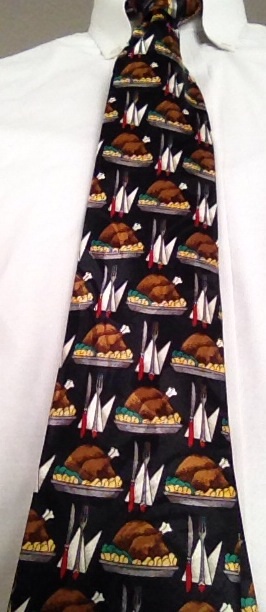
Often Parashat Toldot corresponds with Thanksgiving. This year, they’re a few weeks apart. Nevertheless, the turkeys on this week’s tie represent the prominent role of food in the drama of Jacob and Esau.
Food and sustenance play a prominent role in Parashat Toledot. Jacob tricks Esau out of his birthright for a bowl of stew. He later deceives his blind father by wearing hairy skins to appear like his brother as if he had just returned from a hunt. His mother Rebecca prepares the purported game for Jacob to present to Isaac and receive in return his innermost blessing intended for the first born. In between these two narratives centered around food, we learn that Isaac reclaims the wells that his father had dug in Canaan. The family legacy cannot continue without sustenance from water, nor can it continue without nourishment from food. Often Parashat Toldot corresponds with Thanksgiving. This year, they’re a few weeks apart. Nevertheless, the turkeys on this week’s tie represent the prominent role of food in the drama of Jacob and Esau.
#TieBlog #HayyeiSarah
23 OctParashat Hayyei Sarah begins with the death of Sarah and her burial. Abraham, confronting mortality, then sends his servant (known in the Midrash as Eliezer) to venture to Mesopotamia to find a suitable wife for Isaac. Eliezer’s caravan includes many camels. He knows he’s found “the one” for Isaac when Rebecca appears at the well and graciously draws water not just for the people in the caravan but for the camels as well. After Eliezer seals the deal with Rebecca’s family, she returns with Abraham’s servant to Canaan. She’s riding a camel when she first lays eyes on Isaac praying in the field. She’s so smitten she falls off the camel. #TieBlog pays homage to the camels who helped perpetuate the legacy of Abraham.
Heroes and Their Tragic Flaws: Remembering Rav Ovadiah Yosef
11 OctHeroes and Their Tragic Flaws
Parashat Lekh Lekha
Rabbi Edward C. Bernstein
October 12, 2013
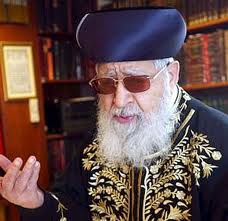
This week, Rabbi Ovadiah Yosef died at the age of 93. He was a true giant among the Jewish people for his leadership and mastery of the art of p’sak halakhah, Jewish legal decision making. Rabbi Ovadiah Yosef was the preeminent voice and authority for Sephardic Jewry, Jews primarily from the Meditteranean rim and the Middle East. He served in the formal role as the Sephardic Chief Rabbi of Israel in the 1970s but remained the dominant Sephardic rabbinic authority in Israel and around the world throughout his life.
As noted in various tributes, Rabbi Ovadiah Yosef was a bold, creative, and confident jurist, and often remarkably in touch with the sensibilities of a broad constituency, especially the oft-ignored working-class. He brought honor to Torah, to God, and to human beings, including many types of people whose voices were systematically silenced in Rabbinic discourse. For much of his career he was a voice of reason and compassion when much of the Orthodox world, particularly Ashkenazi Rabbinic leaders in Israel representing traditions from Eastern and Central Europe were promoting far more stringent paths of observance. Rabbi Ovadiah Yosef’s ruling that the Beta Yisrael community of Ethiopia were part of the Jewish people and did not require formal conversion to Judaism paved the way for Israel to bring tens of thousands of them to Israel. His voluminous responsa also show sensitivity to the economic plight of many of his constituents. While more prosperous Ashkenazic households were more prone to spend lots of money to keep a kosher kitchen, going so far as to purchase two dishwashers, he was more lenient.
Religiously observant Sephardic women in Israel commonly wear pants, thanks to Rav Ovadiah, while Ashkenazi authorities long ago decreed women could only wear skirts. An even more noteworthy ruling favorable towards women was one he wrote after the 1973 Yom Kippur War. He allowed hundreds of women whose husbands were missing in the war to remarry, although, traditionally, remarriage is allowed only after a woman has received a “get,” a religious bill of divorce from her former husband or there is incontrovertible proof that her former husband has died. The plight of the Agunah, a woman chained to a defunct marriage, continues to be a vexing problem in much of the Jewish world today, largely because of the lack of courage and vision among rabbinic authorities. Rav Ovadiah stood up boldly to free women from this state.
In the euphoric years after 1967 War, many Ashkenazi religious Zionists were filled with messianic zeal for the prospect of settling the newly occupied territories. R. Ovadiah Yosef, however, ruled that it was permissible to exchange land for peace. He was a bold, creative rabbinic thinker and leader, and he should be praised as such.
The story of R. Ovadiah Yosef doesn’t end there, though. He was a complex personality.
Over the last two decades, he became increasingly known as a political figure. He was the inspiration and spiritual head of the Shas Party in Israel. Shas, an acronym for Shomrei Sefarad, the guardians of Sephardic Jewry, started as a response to the plight of Sephardic Jews in Israel who were consistently poorer, less educated and less upwardly mobile than Ashkenazi Israelis. While its original intentions as a social movement were noble, over the years Shas became a significant political party and has been tainted by corruption on numerous occasions. This tarnished the reputation of R. Ovadiah Yosef. Furthermore, as various obituaries noted, Rav Ovadia, particularly in his later years, often made caustic, hateful comments about various groups of people. His intemperate remarks in many of his weekly sermons often lashed out against those he despised — rival politicians, gay people and perceived enemies of Israel. He likened Palestinians to snakes and said God put gentiles on earth only to serve Jews. In 2010, he called President Mahmoud Abbas of the Palestinian Authority “evil” and asked God to strike “these Ishmaelites and Palestinians with a plague, these evil haters of Israel.” Comments like these contributed immeasurably to a growing culture of violent and hateful speech in Israel and the Jewish world. Through comments such as these, he brought disgrace to Torah, to God, and to human beings. He placed many vulnerable people in greater danger through his aggressive and toxic speech,
Who was the real Rabbi Ovadiah Yosef? The answer is they were both one and the same person. He was a complex individual. It shouldn’t come as a surprise to us that he had such a multi-faceted personality. We need only turn to today’s Torah portion, Lekh Lekha, to meet another complex hero of the Jewish people, our patriarch Abraham. Immediately upon settling in Canaan as God had instructed, Abraham uproots himself and brings his household to Egypt. The text says vayered Avram Mitzraymah, Abram went down to Egypt, suggesting that he lowered himself to the moral level of that society. What happens next is particularly disturbing. Abraham is afraid that the Egyptians will kill him and take his wife Sarai and ravage her. What does he do? He says that Sarah is his sister. She would be vulnerable to being kidnapped and assaulted, but at least he would live. This is not a shining moment of chivalry in the life of our patriarch. Clearly, in this environment of danger and depravity, we can understand Abraham’s fear that led him to deceive others to save himself. While we can understand his fear, we cannot justify his actions, and that is the Torah’s point. As Rabbi Harold Kushner writes, the Torah continually portrays its leading figures with all of their flaws, perhaps to teach us that we too can be good people without being perfect people. Look throughout the Bible and we find one hero after another, each of whom we meet as flawed human beings. These include Jacob, Moses, and King David.
Looking at American history, we find that many of America’s most outstanding leaders and statesmen often displayed deep contradictions. Thomas Jefferson wrote in the Declaration of Independence, “We hold these truths to be self- evident that all men are created equal.” Yet, for several more decades he continued to own slaves. President Roosevelt was hailed for guiding the nation out of the Depression and for his moral clarity in leading the nation in war against fascism in Europe and Japan. Yet, history has shown that when he had the knowledge of the plight of European Jewry and the power to save them from slaughter, he failed to exercise that power. Dr. Martin Luther King, Jr. led the Civil Rights movement, while at the same time he consistently cheated on his wife.
The Torah was not given to angels. It was given to human beings with the intention that we would be inspired by its teachings to improve ourselves and our world. The major characters of the Torah are flawed human beings who, despite their limitations, or perhaps because of them, are able to succeed despite their natural human fears and desires. We can and should condemn individual acts of behavior that get in the way of bringing godliness into the world. At the same time, let us pause to appreciate great contributions to society. Rav Ovadiah Yosef was a complex human being who was a once-in-a-generation scholar. Israel and the Jewish world, on balance, were enriched by his immense contributions. May his memory be for a blessing.
#TieBlog #LekhLekha
10 Oct
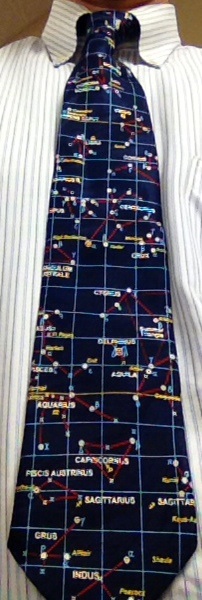
In Parashat Lekh Lekha, Abram (later re-named Abraham) hears the call from God to uproot himself from everything that is familiar to him and go to Land that God will show him so that he will become a great nation. One problem: he and his wife Sarai (later re-named Sarah) are elderly and childless. Abram goes along with God’s instructions but later expresses angst that he has no offspring and no heirs. The text in Genesis 15 reads: “3 Abram said further, “Since You have granted me no offspring, my steward will be my heir.” 4 The word of the Lord came to him in reply, “That one shall not be your heir; none but your very own issue shall be your heir.” 5 He took him outside and said, “Look toward heaven and count the stars, if you are able to count them.” And He added, “So shall your offspring be.” 6 And because he put his trust in the Lord, He reckoned it to his merit.” With God calling upon Abram to look to the stars for hope and inspiration, this week’s tie reminds me of this moment of renewal for our patriarch.
Finding the Balance Between Individual and Community
4 OctIn Parashat Noach, we read about the breakdown of society, not once, but twice. From this perspective, it seems timely to read Noach this week. It is hard not to be mindful of the nearly one million public servants in our Federal government who are not receiving paychecks as a result of the government shut down. There is a ripple effect throughout the country as the country’s business isn’t getting done. Cancer trials aren’t happening, small business loans aren’t being made, tax refunds aren’t going out. Real people’s lives are affected. The situation is grim and painful to witness as our elected officials are unable to come to agreement on the budget. The political atmosphere in Washington is tense and surreal. Amidst all of the political standoff, a crazed woman led police on a high speed car chase around the capital before she was shot dead on Capitol Hill. She was the only casualty, but one can certainly wonder if we are witnessing the breakdown of society. So, it’s with this backdrop that we turn to Parashat Noach for a spiritual lesson.
In Parashat Noach, we meet two doomed societies: the generation of the flood and the generation of the dispersion in the Tower of Babel story.
In response to sin, the text tells us that God destroys the first of these generations through a flood which encompasses the entire world. The only survivors are Noach, his family and the animals that Noach, upon God’s command, brings into the ark.
We’re told later in the Torah reading about the next generation that is punished through God’s decree of linguistic confusion. In response to the building of the Tower of Bavel, God creates a myriad of languages. The builders of the tower, unable to communicate with each other, disperse across the face of the earth.
The structure of our Torah portion raises one basic question: Why are these two stories juxtaposed to one another? Why are they in the same parashah? How are these stories in relationship with each other, and what can we learn from it?
The Rabbis of the Talmud and Midrash offer interpretations on the nature of the crimes of the societies that in turn lend credence to their inclusion together in the parashah.
According to the text itself, the generation of the flood was guilty of hamas. What is hamas? It is a coincidence that this word is a homophone of the Islamic terrorist organization, but they are not related etymologically. The Hebrew word hamas, is understood by our tradition as violent theft. The rabbis of the Talmud describe more in full their understanding of the culture of theft and corruption that existed in the time of Noah.
In the Jerusalem Talmud, Rav Acha asks, “What did they steal? A merchant would walk through the marketplace with a container filled with grapes and each passerby would reach forth and steal a small amount, less than he could be called to judgment for (TJ Bava Metzia, 4:2).
From the Rabbinic perspective, the sin of the generation of the flood boils down to their mocking of societal norms and laws. Driven by personal greed, each individual steals from his neighbor. He does so in such a way, however, as to escape the reach of the law. By the time the merchant reaches the end of the marketplace he has no grapes left. No one, however, can be taken to court. Societal rules have been rendered ineffective in the face of personal greed.
In contrast, the sin of the generation of Migdal Bavel, the Tower of Babel, is more difficult to determine. The Torah does not clearly state the sin for which they were guilty. As a result, the rabbis of the midrash imagine the nature and extent of their sin so that we can learn appropriate moral behavior from the story. The Midrashic work Pirkei D’Rabbi Eliezer (24) offers the following story: If a man fell down and died during the process of construction of the tower, no attention was paid to him at all. If one brick fell, however, all would sit down and weep: “Woe to us! When will we find another to take its place?” In other words, those working on the Tower of Bavel cared not at all about the lives of their neighbors. All that mattered was the creation of the tower and the society that it represented.
In the eyes of the rabbis, the two civilizations described in Parashat Noach reflected polar extremes. The society of Noach’s time was characterized by individual greed at the expense of communal structure. The generation of the dispersion, on the other hand, was willing to sacrifice individual life to the creation of society. In the age of Noah, when everyone but Noah and his family was guilty of theft, all individuals were punished. When it came to the builders of the Tower of Bavel, however, the problem was with the society, not the individuals. In this case, therefore, only the society is destroyed.
In each era, mankind struggles to strike a balance between two opposing forces: the needs of the individual and the needs of the community. Each of these forces, by definition, impinges upon the other. In the totalitarian Soviet Union, individual rights were suppressed for the sake of the larger state. At the other end of the spectrum, it’s suggested by many that the Tea Party is ensconced in its extreme libertarian ideology where the individual is paramount, vital national institutions that support the health, safety and welfare of our country are allowed to crumble. In my opinion, neither extreme is sustainable. We have to find a middle ground.
In order to create and maintain the rules necessary for communal governance, a society must, of necessity, place limits upon personal freedoms. To cite a well-known example, you cannot allow someone to yell fire in a crowded theater. On the other hand, a society must limit the restrictions it places upon its citizens in order to allow for individual freedom of expression and action.
The particular balance that a society creates between these two forces determines the very nature of the society itself.
Parashat Noach is not a collection of quaint fairy tales. The two major narratives teach us about how, at the dawn of civilization, two generations fail in their attempts to create an equilibrium between individual and community, with the failures occurring at opposite ends of the spectrum.
In the aftermath of the failures of both generations of the flood and dispersion, the parsha closes by introducing us to Avram, who is to become Avraham Avinu, Abraham our Patriarch. He will lead the way towards creating a new society, one that strives to create a delicate balance between the needs of the community and the needs of the individual. God will promise Abraham that the society he will create, the Jewish people guided by the Torah, will be destined to endure throughout the ages.
To this day, we still strive to find the delicate balance between the needs of the individual and the needs of the community. We need this balance, and our society desperately needs Judaism’s moderating voice. May the lessons we derive from Parashat Noach provide us with valuable guidance in this quest in promoting the dignity of all human beings.
#TieBlog #Noah’sArk
2 OctAs we turn to Parashat Noah, we are faced with the perplexing challenge posed by the first verse, “Noah was a righteous man, perfect in his generation.” Why does the text say “in his generation”? The rabbis of old had a debate. Some say that if Noah could stand out in his age when surrounded by depravity, all the more so in other ages when he would have other decent people around him. Other rabbis aren’t so sure. He was certainly better than the people around him, but he would have paled in comparison to an Abraham or Moses who intervened before God on behalf of people condemned to die. Noah never says anything. He builds his ark and goes on his way. His action (or inaction) stands in contrast to Abraham challenges God directly when Sodom and Gomorrah are doomed to destruction. “Will the Judge of all the earth not do justice?” (Gen. 18:25), Abraham pleas, hoping the depraved cities would be spared for the sake of even ten righteous people. Abraham intervened with God on behalf of the righteous. Moses takes it a step further and intervenes to save the guilty, the people of Israel who commit the sin of the Golden Calf (Exodus 32). The trajectory of the Torah suggests that Noah was righteous for his time, but would have paled in comparison to the giants of later generations.
Extrovert or Introvert? Channeling the Personalities of the Jewish Holidays
28 SepChanneling the Personalities of the Jewish Holidays
Shemini Atzeret
Rabbi Edward C. Bernstein
September 26, 2013
(I am indebted to Rabbi Joshua Heller and Rabbi Elliot Cosgrove for introducing me to Susan Cain’s book Quiet and drawing key connections between the book and Jewish life in prior sermons.)
There’s a story of a yeshiva high school that wanted to boost its sports profile. They thought it would be good for recruitment and fundraising. The school was near a river, so they figured they would start a crew team. Unfortunately, they lost every race. One day, they sent one of the students to spy on another school’s team. The student came back to report: “I know their secret! They have eight guys rowing and just one guy yelling.”
We see in this story a certain stereotype of Jews that suggests each one of us wants to be a big shot. When we get together, we are boisterous and assertive, and we actively seek out such opportunities. However, this is not always the case. Jews are as likely as anyone else to favor traits that require good listening skills, patience and quiet. Let me ask you some questions.
Do you prefer one-on-one conversations or group activities?
Do you prefer to express yourself in writing or orally?
Do you enjoy solitude or crowds?
When your phone rings, do you prefer to send it to voicemail, or answer it right away?
Are you risk averse, or a risk-taker?
Do you feel drained after a weekend of social activities even if you enjoyed them, or do you feel recharged?
If you answered yes to the first half of each choice, you are more likely to be introverted. If you answered yes to the second half you are more likely to be extroverted.
There’s a compelling book that has been on the New York Times best seller list for over a year called Quiet: The Power of Introverts in a World That Can’t Stop Talking. The author, Susan Cain, a self-proclaimed introvert, offers an in-depth analysis of different personality traits. She asserts that modern Western culture, particularly in America, tends to favor extroverts, particularly over the last century. In the early 1900s, Dale Carnegie started his course “How to Make Friends and Influence People.” That reflected a trend then that has only deepened since in which Americans tend to favor style over substance. In other words, our society puts more value in extroverts. Cain argues that this trend has largely been to our nation’s detriment. She illustrates how introverts and extroverts each have essential strengths and that society benefits when they work together.
Cain notes that the Civil Rights movement in the 1950s and 1960s was enriched by both Martin Luther King, Jr. AND Rosa Parks. Dr. King, an extrovert, was the grandiloquent spokesman. Parks, was a quiet, soft-spoken woman who was not one to make waves except when she felt compelled to act as a matter of principle. She was an introvert. The Montgomery bus boycott and the subsequent civil rights movement succeeded in large measure because Parks and King’s personality traits complemented each other so well. Each was essential to the success of the larger cause.
Cain cites scientific research that shows how extroverted and introverted personality traits are hard-wired into people. An introvert can be perfectly outgoing and extrovert can listen and do quiet activities like reading. However, an extrovert derives energy from being in contact with other people, while an introvert derives energy from quiet and from inner contemplation. Neither personality trait is inherently better than the other, but she cites examples showing that our society has suffered by over-emphasizing the virtue of extroversion. As a case in point, the financial meltdown of 2007-2008 she notes was the result of reckless decisions of highly extroverted executives. Over the last few years, it was found that more introverted analysts working at many of the financial institutions issued warnings of the problems with such things as mortgage-backed securities years before the meltdown, but they were ignored by their high-rolling superiors. Their voices were snuffed out. Our entire economy suffered from this lack of balance.
Sukkot and Shemini Atzeret (Thursday, September 26), together remind us of the need for balance. After a week of festivity during Sukkot, the rabbis in the Midrash understood the Torah’s word atzeret to convey stopping or delaying. “‘I have stopped (atzarti) you, from leaving,’ [says God]. [It can be likened to] a king invited his children to a banquet lasting many days. At the banquet’s conclusion when it came time for the children to leave he said, ‘My children! I beg of you, delay your departure by one more day. It is difficult for me to take leave of you.'” As long as the fall holiday season has been, let’s let it linger a little bit longer, our tradition tells us. Up until now, it’s been a big, brash party. Let’s take a quiet moment, one on one.
In another midrash, the sacrifices of the seven days of Sukkot done in Temple times were in honor of the 70 nation of the world. On Shemini Atzeret, just one bullock is sacrificed, symbolizing the relationship of God and Israel. It’s as if throughout Sukkot, God is “working the room” of a big party at which all the nations of the world are guests. At the end though, God wants to have a quiet, intimate conversation with Israel.
For me, the Midrashim suggest that the relative calm and simplicity of Shemini Atzeret is a necessary complement — perhaps, even, a corrective — to the pomp and circumstance of the surrounding holidays. On the High Holidays, the synagogue is like a grand concert hall in which the sound of the shofar pierces our hearts. On Sukkot we have the pageantry of the lulav and etrog and the multi-sensory ritual of dwelling in a Sukkah. Shemini Atzeret lacks the grandeur and ritual of the preceding holidays. The revelry of Simhat Torah we delay another day. The message of Shemini Atzeret is that God is not to be found only in the peak moments of petition and celebration. These serve as catalysts for intimacy with the divine in daily life, not as substitutes for that closeness. Shemini Atzeret reminds me that God seeks my presence as I seek God’s. God needs some one on one time, and so do we. Shemini Atzeret reminds us that the opportunity for a more intimate encounter with God exists every day of the year, with or without a shofar, sukkah, or lulav and etrog. It seems from all of this that God has both an extroverted side as well as an introverted side. An extrovert might thrive in a party with a room full of people, while an introvert would prefer having a more subdued conversation with one other person. The midrash provides an image God requiring both settings.
Within the Torah itself, we find models of both introverts and extroverts. On Simhat Torah we read the end of the Torah, including the death of Moses. Moses is the Torah’s introvert par excellence. Yet, his brother Aaron was an extrovert. They needed each other and complemented each other just like Dr. King and Rosa Parks did in more recent times.
As a younger man, Moses was perfectly comfortable spending 40 years tending sheep- (a solitary activity). When God comes to Moses, he refuses a public role. He says “Lo Ish Devarim anochi”- I’m not a man of words. I’m a stutterer. I’m a back-office guy. In the end, God has Aaron serve as Moses’s mouthpiece to take on the public role. Moses grows into the public role of leadership, but the high points of his life are still relatively solitary. He goes up Mount Sinai for 40 days, just him and God. He is often separated from his family. According to many rabbinic commentaries to Numbers 12:1, when Aaron and Miriam speak against him regarding the “Cushite Woman”- they are saying that he is so enwrapped in holy activities that he is neglecting his wife and family. They can’t let him be. Moses would not be regarded by others as the “life of the party.” Rather, God singles out Moses for praise as the most humble of people.
In contrast, Aaron is the classic extrovert. When Moses is coming back to Egypt, the proactive Aaron is already on the road to meet him. Throughout the encounters with Pharaoh, Aaron is the mouthpiece. Once they reach the desert, when the Israelites want to make an idol, Aaron is there, swayed by the crowd, and facilitates the making of the golden calf. The midrash tells us that Aaron was ohev shalom v’rodef shalom, he loved peace and pursued it. He was aggressive and proactive in social situations. When two people fought, Aaron would go and sit with one and say “My son! See your friend, see how he tears his heart and his clothes, and says ‘how can I stand to see my friend- I’m embarrassed before him because I was unkind to him.'” And he would sit with him until the anger passed. And he would go sit with the other, and say the same thing and sit with him until the anger passed. The two rivals would meet, and they would kiss and make up. Aaron was able to approach people he barely knew and touch them deeply.
What is fascinating about both Moses and Aaron, not only do they complement each other, but they also each find ways to step out of their comfort zones to do great things. For Moses, the man who said “I am not a man of words” – lo ish devarim anochi–wrote an entire book of the Torah called, Devarim—words. It is essentially a series of major speeches Moses delivers to the people on the banks of the Jordan River. We complete that book tomorrow. Conversely, Aaron the High Priest was a highly public figure. He brought many offerings, he wore many types of garments. He washed many times. All eyes were upon him. However, on Yom Kippur, his most important task was in privacy, in solitude, entering the holy of holies, alone.
We should each cherish our essential nature, as introverts and as extroverts. At the same time, let’s recognize that Jewish practice enables us both to live comfortably in our nature, and to feed and stretch the other aspects of the soul. Our tradition bids us at times to make an effort and step out of our comfort zone and go against our type.
As we gather for Yizkor on Shemini Atzeret at the end of this extensive holiday season, we recall our departed loved ones who loved us unconditionally regardless of, or perhaps because of, our personality type. We honor their memory today by reflecting on their being present for us. In some cases, we might express regret that at times they might not have been present enough for us or that we were not present enough for them. If we are lucky, they challenged us to step out of our comfort zones while at the same time remaining true to our essential character. We honor their memory today by resolving to do the same in our present relationships—be true to ourselves while pushing ourselves beyond our comfort zones for the sake of strengthening our relationships.
As we pause to reflect on our relationships today, we realize that being in relationship is complex. Only God can manage to perfectly balance introversion traits and extroversion traits. Some people, like Moses and Aaron, can find ways to complement their respective strengths, but we know that even they experienced tension with each other at times. Still, our tradition, calls upon us to imitate God to the best of our ability in order to bring God’s presence into our lives and the lives of others. On Shemini Atzeret, we think about God seeking to linger in our presence because God needs quiet intimacy as much as grand pageantry. Shemini Atzeret reminds us that God and Israel are like a pair of loved ones who seek both intimacy and mutual growth. May the memory of our departed loved ones inspire us to be present for one another, to validate others as we were validated and to challenge one another towards meaningful growth.