Tag Archives: Judaism

#TieBlog #Balak #BalaamandTalkingDonkey

4 Jul
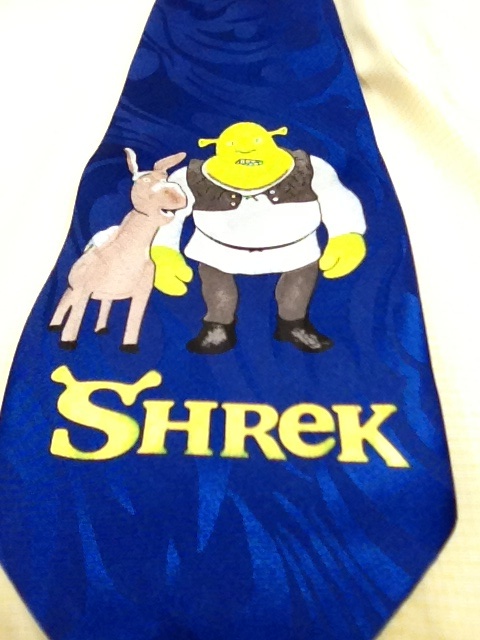
Shrek and his talking donkey friend are reminiscent of Balaam and the talking donkey.

Shrek and his talking donkey friend are reminiscent of Balaam and the talking donkey.

Balak, King of Moab, seeks a cost-efficient means to destroy the Israelites and hires Balaam, wizard extraordinaire, to curse Israel. It’s puzzling that rather than bless his own people, Balak sought to curse another. In today’s world, too often people’s hatred of others is greater than their love of themselves.

In the meantime, every time Balaam the Wizard-For-Hire goes to curse the Israelites, out of his mouth come warm blessings. Balaam is not pleased by his performance that God has caused, and he takes his frustrations out on his donkey–who talks back to him! You can read the dramatic exchange below. As you do, take a look at my tie of the week. You may want to picture in your mind Shrek (voiced by Mike Meyers) as Balaam and the donkey (as voiced by Eddie Murphy)–as the donkey!

Numbers 22

21 And Balaam rose up in the morning, and saddled his ass, and went with the princes of Moab.
22 And God’s anger was kindled because he went; and the angel of the Lord stood in the way as an adversary against him. Now he was riding upon his ass, and his two servants were with him.
23 And the ass saw the angel of the Lord standing in the way, and his sword drawn in his hand; and the ass turned aside out of the way, and went into the field; and Balaam struck the ass, to turn it to the way.
24 But the angel of the Lord stood in a path of the vineyards, a wall being on this side, and a wall on that side.
25 And when the ass saw the angel of the Lord, it pushed itself to the wall, and crushed Balaam’s foot against the wall; and he struck her again.
26 And the angel of the Lord went further, and stood in a narrow place, where there was no way to turn either to the right hand or to the left.
27 And when the ass saw the angel of the Lord, it fell down under Balaam; and Balaam’s anger was kindled, and he struck the ass with a staff.
28 And the Lord opened the mouth of the ass, and it said to Balaam, What have I done to you, that you have struck me these three times?
29 And Balaam said to the ass, Because you have mocked me; I wished there was a sword in my hand, for now would I kill you.
30 And the ass said to Balaam, Am not I your ass, upon which you have ridden ever since I was yours to this day? Was I ever wont to do so to you? And he said, No.
31 Then the Lord opened the eyes of Balaam, and he saw the angel of the Lord standing in the way, and his sword drawn in his hand; and he bowed down his head, and fell on his face.
32 And the angel of the Lord said to him, Why did you strike your ass these three times? Behold, I went out to withstand you, because your way is perverse before me;
33 And the ass saw me, and turned from me these three times; if it had not turned aside from me, surely now also I would had slain you, and let her live.
34 And Balaam said to the angel of the Lord, I have sinned; for I knew not that you stood in the way against me; now therefore, if it displeases you, I will go back again.

#TieBlog #Hukkat

27 Jun
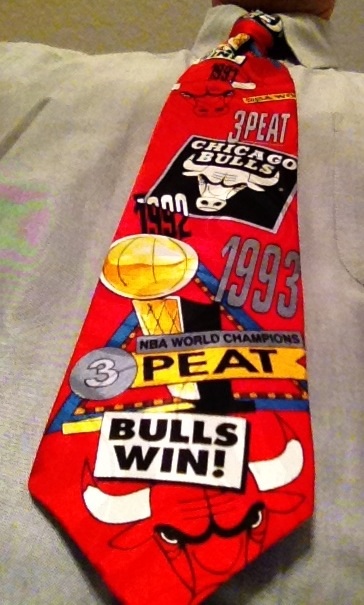
The Red Chicago Bulls logo is reminiscent of the Red Heifer in Parashat Hukkat.

The Red Chicago Bulls logo is reminiscent of the Red Heifer in Parashat Hukkat.

This tie is in honor of the sacrifice of the Red Heifer described in Numbers 19, the beginning of this week’s Parashat Hukkat. One could not enter the precincts of the Tabernacle or Temple in a state of ritual impurity. Only being sprinkled with the ashes of the red heifer would remove defilement from having had contact with the dead. As Professor Jacob Milgrom wrote, the Temple is a place to affirm life. Associations with death are not welcome. Of course, a bull is male and a heifer is female, but why get hung up on small details? Shabbat Shalom.

#TieBlog #Korach #RebelWithoutACause

17 Jun
James Dean was  not the original "Rebel Without a Cause;" he inherited the mantle from Korach.

James Dean was not the original “Rebel Without a Cause;” he inherited the mantle from Korach.

Parashat Korach tells the tale of perhaps the original “rebel without a cause.” A Levite, Korach is jealous of the power and prestige of his cousins Moses and Aaron and stages a rebellion. With an assist from God, the rebellion fails miserably, and Korach and his comrades are swallowed by the earth. Several millennia later, James Dean inherited from Korach the mantle of “Rebel Without a Cause;” hence, the tie of the week.

“You’re Not Special”

6 Jun
David McCullough, Jr.'s commencement address in 2012 in which he told high school seniors, "You Are Not Special."

David McCullough, Jr.’s commencement address in 2012 in which he told high school seniors, “You Are Not Special.”

“You’re not special.” That’s what high school teacher David McCullough, Jr. told students two years ago in a commencement speech at a Wellesley High School outside of Boston. He thought his audience was the graduating class, but the electronic world was eavesdropping. The 12-minute speech went viral. Suddenly he received emails from around the world, and networks wanted interviews. McCullough’s speech startled many because his message to the students was: “You’re not special.” He criticized well-meaning but micro-managing parents for the intense pressure they put on teenagers to excel. He argued that students are so afraid of failure that they miss the opportunity to make and learn from mistakes, and ultimately could miss out on having a fulfilling, happy life. McCullough recently developed his speech into a book titled, “You Are Not Special: …And other Encouragements.”

He says that if kids hear that they are more important than others and deserving of accolades, that puts a lot of pressure on them. Far too many kids are absorbing the message that the purpose of the endeavor is praise—pleasing Mommy or Daddy, for example. They learn that the purpose of activities is the accolades they will receive rather than the pleasure of doing something.

David McCullough, Jr.’s insight could have been inspired by an episode in this week’s Torah portion, Behaalotekha. We are introduced to two characters, Eldad and Medad, about whom, we are told, vayitnabu ba-mahane, they prophesied in the camp. What led to this, and what happened as a result? In chapter 11, Moses complains to God that he can’t bear the weight of the people by himself, so God commands him to appoint 70 elders to enter the Tent of Meeting to assist him in the official leadership of the people.

The Torah then reports the following: Moshe gathered 70 of the people’s elders and stationed them around the tent. Then God came in a cloud and spoke to Moses, drawing upon the spirit that was on him and putting it upon the 70 elders. And when the spirit rested upon them, they prophesied, but did not continue. It turns out that these seventy elders were not so special, after all. Two men, Eldad and Medad had remained in the camp; yet the spirit rested upon them– they were among those recorded, but they had not gone out to the tent–and they prophesied in the camp. A youth ran out and told Moses saying, ‘Eldad and Medad are acting the prophet in the camp!’ And Joshua…spoke up and said, ‘My lord, Moses, restrain them!’ Joshua believes that prophecy is reserved for special people, and others dare not encroach on this endeavor. But Moses said to him, ‘Are you jealous on my account? If only all of the Lord’s people were prophets, that the Lord would put His spirit upon them!’
The Talmud (Sanhedrin 17a) records two opinions interpreting what happened. The first says that essentially, Eldad and Medad missed the cut. God commanded Moses to choose 70 elders. Moses cannot figure out how to select the men in a fair and representative way. If he picks five from each of the twelve tribes, he will have only 60. If he picks 6 from each tribe, he will have 72–too many, for when God says 70, it means 70. If he picks five from some tribes and six from others, he will foment jealousy and rivalry among the tribes. So he picked six from each tribe and put 72 pieces of paper in a ballot box. On 70 of them he wrote Elder, and two he left blank. Eldad and Medad were the random two who picked the blank ballots and did not make the cut.

A second view in the Talmud is that all 72 were chosen, but that Eldad and Medad did not feel worthy of the task and stayed behind. God rewarded them for their humility by granting them permanent prophetic abilities, while the prophetic abilities of the 70 elders soon came to an end.

These two interpretations both reflect important statements of Rabbinic values about leadership. The first emphasizes the point that the people must feel invested in the system in order for it to work. They need to feel represented. They need to be engaged in the process of determining their destiny.

The second interpretation emphasizes the value of humility in leadership. Eldad and Medad, because of their modesty, are rewarded with increased spiritual access to the divine presence. In the midrash, they emulate the modesty that Moses displays in the Biblical text itself. Moses is not afraid of other Israelites engaging in prophecy, even if they are not official leaders. Rather, he embraces such an opportunity. Moses knows that despite his spiritual gifts, there are other Israelites with unique gifts who can help bring God’s presence into their midst. As far as our lives are concerned, every one of us has within us a spark of the divine, and it is up to each of us to harness it for the benefit of the community.
The message of the Torah portion is that bringing God’s presence into the community requires a team effort. No Jew in our history, not even Moshe Rabbeinu, could ever claim a monopoly on holiness and access to God’s presence. Eldad and Medad’s prophecy and Moses’s deference to them, show that all of us have the potential to be touched by God. In other words, the seventy elders were not special. Eldad and Medad were also capable of prophecy. If they can experience closeness to God so intensely, then the rest of us can as well.

The episode of Eldad and Medad is a paradigm that each one of us has the potential to carry within us God’s spirit. They call upon us to engage in meaningful Jewish experiences not to bring us accolades but because we will feel closer to the divine in our midst.

Let me close with a prayer that Parashat Behaalotekha will inspire each of us to search for that divine spark within ourselves and that we may have the strength and courage to share that spark with our friends, neighbors and loved ones that will in turn bring about tikkun olam, repair of our world.

#TieBlog #Behaalotekha

6 Jun
Parashat Behaalotekha begins with instructions to Aaron to light the Menorah.

Parashat Behaalotekha begins with instructions to Aaron to light the Menorah.

Parashat Behaalotekha begins with instructions to Aaron to light the lights of the Menorah in the Tabernacle. In addition, the haftarah (prophetic reading) is taken from Zechariah and contains the prophet’s vision of the Menorah. This same selection is repeated on Shabbat-Hanukkah. The text of the haftarah inspired the lyrics of Debbie Friedman’s classic song: “Not by might, and not by power. But by spirit alone shall we all live in peace.” May the light of the Menorah inspire all of us to such a vision.

Shavuot, Yizkor and D-Day

3 Jun
D-Day, June 6, 1944

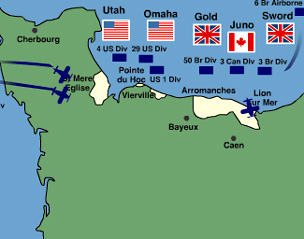
D-Day, June 6, 1944

We gather today for Shavuot and Yizkor to remember our loved ones who are no longer with us to celebrate the festival with us. This year, we have added reason to focus today on remembering our departed. June 6, 1944, exactly 70 years ago tomorrow, was D-Day, the day on which the Allies made their momentous assault on Nazi-occupied France. It happens that June 5 was the initial date set for D-Day, but it was not actually executed until the 6th. So, from one perspective, today is the anniversary.

Words are inadequate to describe the epic scope of this decisive battle that foreshadowed the end of Hitler’s diabolical dreams of world domination. Operation Overlord, the official name of what is commonly known as D-Day, was the largest air, land, and sea operation undertaken before or since June 6, 1944. The landing included over 5,000 ships, 11,000 airplanes, and over 150,000 service men.

After years of meticulous planning and seemingly endless training, for the Allied Forces, it all came down to this: The boat ramp goes down, then jump, swim, run, and crawl to the cliffs. Many of the first young men (most not yet 20 years old) entered the surf carrying eighty pounds of equipment. They faced over 200 yards of beach before reaching the first natural feature offering any protection. Blanketed by Nazi fire power, they found themselves in hell. One local D-Day veteran, Sol Kaslow, was quoted in the Palm Beach Post saying, “I was struck by the smell. It was the dead bodies, and the ammunition had a certain odor. And that stayed in my mind.”

When it was over, the Allied Forces had suffered nearly 10,000 casualties; more than 4,000 were dead. Yet somehow, due to planning and preparation, and due to the valor, loyalty, and sacrifice of the Allied Forces, Fortress Europe had been breached (from: http://www.dday.org/history/d-day-the-invasion/overview). From that day forward, the Allies methodically pushed the Nazis out of France, back into Germany. Eleven months later, the Nazis were finally defeated. Seventy years after D-Day, this singular moment in history stands out for the courage of the thousands of men who sacrificed so that the world would be freer.

The confluence of Shavuot and D-Day this year is a chance to reflect on the values represented by both Judaism and America. Judaism promotes a strong sense of communal obligation, calling upon us to reach beyond our own self-interest for the benefit of all. Certainly, the heroes of D-Day served in this spirit. The heroes of D-Day also represented the American ethos of freedom. They bravely faced the most maniacal enemy of freedom in history in order to preserve our freedom.

Jewish tradition champions freedom. In fact, on Shavuot, we celebrate the completion of the physical freedom achieved in the Exodus from Egyptian slavery to a new found spiritual freedom. Shavuot commemorates the receipt of the Torah – a pivotal moment when Jews collectively entered a covenant that transformed us into a people – a community bound together by shared obligation and commitment to freedom. Shavuot adds another important element for our contemplation: hesed, lovingkindness. The Torah provides us with our essential toolkit for bringing hesed into the world. In case we missed the point, the book of Ruth that we read on Shavuot emphasizes the centrality of sharing lovingkindness with others.

A strong case can be made that Jewish values and American values are very different. Judaism emphasizes obligations and communal loyalty, while American society emphasizes individualism and personal autonomy. This valid distinction occasionally produces tension, but that’s for another day. Today we acknowledge and celebrate how Judaism and American values share much in common and complement each other where they don’t.

Many Jewish Americans feel the bond between Judaism and American freedom intuitively. Alan van Capelle, Director of Bend the Arc, a Jewish public policy advocacy organization writes that Jews’ belief in the promise of America “is in our DNA – that it is something we couldn’t escape even if we wanted to – and that we don’t want to escape it because it enhances our lives, infusing them with meaning.” He adds that a strong sense of purpose, of being part of something greater and more important than ourselves, is the reason the Jewish community withstood thousands of years of adversity and continues to grow today.

For Jewish Americans, even if we don’t realize it, there is a direct link between our sense of covenant at Sinai and the numerous proud examples of tikkun olam, repair of the world, that American Jews have led the way in carrying out. At our Tikkun Leil Shavuot, many of us heard inspiring examples of Jewish Americans within our own community who have made a difference. Rabbi Sid Shanken shared his moving account of when he was a freedom rider fifty years ago in the summer of 1964. We also heard Linda Geller Schwartz of NCJW and learned of the outstanding work her organization is doing to combat human trafficking. Our ongoing efforts to emulate people like Rabbi Shanken and Linda Geller Schwartz honor the sacrifice our troops made on D-Day and the freedom for which they were fighting. Our efforts to repair the world also honor our commitment to Torah, our precious gift that we received on Shavuot.

We should never know from another D-Day, but the D-Day of 70 years ago reminds us of what our nation stands for and for which so many of our troops died. We can never fully repay the debt we owe to those who served our nation in World War II, but we must try. Our payment of that debt is to ensure that everyone can share in the social and economic opportunity of our nation and enjoy equal rights and liberties. Achieving the promise of America is what our troops fought for 70 years ago, and what we owe them today. The promise of America is the bridge between Shavuot – which reminds us of our obligation to build a society rooted in hesed, lovingkindness – and the anniversary of D-Day – which reminds us that Americans have been willing to die in this effort.

As we recall our loved ones during this yizkor service, we honor their memory for the Jewish values and the American values that they stood for. May the memory of our departed loved ones inspire us to strengthen our country so that future generations may benefit the way past generations have benefitted from the American project. And may the memory of our departed bring us closer to the best of Jewish values that our loved ones represented so that we can impart a Jewish tradition of meaning for generations to come.

#TieBlog #Bemidbar #Numbers

23 May
The Book of Numbers

The Book of Numbers

Another numbers tie? Well, that’s because we’re starting to read the Book of Numbers, or Sefer Bemidbar in Hebrew, beginning this week with Parashat Bemidbar. Bemidbar literally means “in the desert.” The English name “Numbers” relates to the census of the people described in the opening of the book.

#TieBlog #Behukotai

16 May
Edvard Munch's "The Scream" evokes the emotions intended by the reading of the "Tochecha" (reproof) Leviticus 26: 14-45.

Edvard Munch’s “The Scream” evokes the emotions intended by the reading of the “Tokheha” (reproof) Leviticus 26: 14-45.

Parashat Behukotai concludes the book of Leviticus. The portion begins with a promise of blessings for the Israelites if they follow God’s ways. This section is then followed by a lengthy and chilling series of curses known as the Tokheha (Reproof). The curses are spelled out in length in the hope that they will put fear into the hearts of those who cannot be persuaded to do what is right by any other means. As this portion is read in synagogue, it is customary for the reader to read through the Tokheha in an undertone, perhaps because its vision of disaster is so frightening–or perhaps in keeping with Leviticus’s commitment to the reality of words, to say something aloud is halfway to making it happen. (Rabbi Harold Kushner, Etz Hayim, p. 747). In my tie wardrobe, Edvard Munch’s “The Scream” seems to fit the bill perfectly as an emotional reaction to this portion.

Who speaks for the American Jewish Community?

9 May
Tally of votes in J Street's failed bid to join Conference of Presidents of Major American Jewish Organizations

Tally of votes in J Street’s failed bid to join Conference of Presidents of Major American Jewish Organizations

Who speaks for the American Jewish community? For years the assumption has been that the Conference of Presidents of Major American Jewish Organizations was the main voice of the American Jewish community. The Conference of Presidents is an umbrella encompassing some 51 Jewish organizations representing all of the religious streams, defense organizations and other significant American Jewish institutions. Their mission is to produce consensus statements on behalf of American Jews on matters important to us, such as Israel’s security, so that political leaders in our country and opinion leaders have a sense of the pulse of the American Jewish community. During the Eisenhower administration, Secretary of State John Foster Dulles complained that he was inundated by so many Jewish organizations lobbying him on Israel, and he didn’t know who spoke for the Jewish community. Therefore, the Conference of Presidents was formed to streamline contact between the Jewish community and Washington. This model works when there is general consensus. Until there isn’t.

Recently, a deep rift in the Jewish community has been exposed over the Conference of Presidents’ vote to reject a membership application by J Street, the so-called “Pro-Israel, Pro-Peace” lobby organization. While the vote was secret, news media reported that of the 42 organizations that participated in the vote, 17 supported J Street’s membership, 22 opposed and three abstained. J Street needed a two-thirds majority of the Presidents Conference, or 34 of the 51 member groups.

I must confess to some personal ambivalence over this vote. Underscoring my own ambivalence, two organizations within the Conservative Movement in which I’m involved cast opposing votes on the matter. I sit on the board of MERCAZ-USA, the Zionist arm of the Conservative Movement, which voted against admitting J Street. The Rabbinical Assembly, on the other hand, voted in favor.

Before I spell out the reasons for my ambivalence, I note that our Torah portion this week, Parashat Behar, is focused as a whole on the Eretz Yisrael, that tract of land that embodies so much emotional, spiritual and religious importance for us as Jews. If Israel did not hold such importance, nobody would be getting worked up over a membership vote in the Presidents’ Conference. The portion describes the practices of Shmittah, the Sabbatical year in which the Land is to lie fallow, and Yovel, the Jubilee, in which all land returns to its original owner, all debts are erased and all slaves are freed. Observance of these laws is meant to remind us that the Land ultimately does not belong to us, but to God. In describing the Jubilee, the text instructs: V’khi timkeru mimkar la’amitecha o kanoh miyad amitecha, al tonu ish et achiv. When you sell property to your neighbor, or buy any from your neighbor, you shall not wrong one another (Leviticus 25: 14).

The Midrash interprets the application of this verse as extending beyond a mere business transaction. Rather, the admonishment al tonu ish et achiv, “you shall not wrong one another,” includes wronging a person with harmful words (Lev. R. 33:1, quoted by Rabbi Harold Kushner, Etz Hayim, p. 740). This includes reminding a repentant sinner of his or her former misdeeds and asking a merchant the price of something when you have no intention of buying. In other words, the Torah is concerned not only with economic justice, as vital as it is, but also in promoting civil discourse.

The centrality of promoting healthy speech in our tradition is the source of my ambivalence over the J Street/Conference of Presidents controversy. On one hand, I have deep concerns about J Street. As Alan Dershowitz wrote an op-ed in Ha’aretz recently:

“[J Street] seeks to attract centrist members by advocating the two-state solution, an aggressive stance towards peace negotiations and criticisms of Israel’s settlement policies. These are positions I fully support, and if they were J Street’s only positions, I would have joined that organization many years ago. But in an effort to expand leftward, particularly hard leftward, it has taken positions that undercut Israel’s security and that virtually no Israeli center-leftists support.”

Dershowitz notes further:
“When J Street invites BDS (Boycott-Divestment-Sanctions) supporters and those [who] oppose Israel’s right to exist as the nation-state of the Jewish people to speak at its events, it claims that it does not necessarily support these positions, but it believes in encouraging its members to hear views that are different from its official positions. That is total nonsense. J Street only wants people to hear views to the anti-Israel hard left of its position. It categorically refuses to allow its members to hear views that are more centrist and more pro-Israel, such as my own.”

As Dershowitz and others have said, J Street speaks out of both sides of its mouth. It says it’s a Zionist organization, but gives public platforms to those who seek to destroy the concept of Israel as the nation state of the Jewish people. Given this track record, I understand the sentiment of the majority of Jewish organizations that see J Street as a threat to the consensus-building mission of the Conference of Presidents.

Despite Dershowitz’s compelling case, I am concerned that J Street may actually have won by losing. The negative vote enables J Street to play the victim and boost their agenda to delegitimize the organized Jewish community. Even for those of us who don’t agree with their platform, they have made significant inroads in the Jewish community, especially on college campuses. Like it or not, they are a “Major American Jewish Organization” that is far more influential than many other long-standing members of the Conference of Presidents. J Street is exploiting the vote for fundraising and publicity. It has declared that the vote is proof that the organized Jewish community is tone deaf and doesn’t care about younger Jews who don’t relate to Israel like their parents and grandparents did.

Rabbi Gerald Skolnik, President of the Rabbinical Assembly, voted in favor of admission and wrote the following in an op-ed in the New York Jewish Week:

“Despite my own personal misgivings about J Street, I advocated for its admission to the Conference precisely because I don’t share its views. There are other members of the Conference whose views are not consonant with my own on matters that are of the greatest concern to me….But in the years that I have participated in its meetings and programs, the Conference has afforded me – and those with whom I differ – a crucial opportunity to move beyond the instinctive demonization of “the other” to a healthier, more reality-based appreciation of the areas of commonality that we share.”

Rabbi Skolnik continues: “That is exactly what should have happened with J Street. Membership in the Conference would have afforded its leadership a crucial opportunity to see the world though the Conference’s eyes, and for the Conference to see the world of Israel advocacy through J Street’s eyes. It would also have sent a much-needed message to the many college students who have found their voice on Israel through J Street that the leadership of the American Jewish community hears them, and values what they have to say, even if it sometimes disagrees. But the Conference of Presidents did not do that, and that was, in my view, most unfortunate.”

We learn in the Torah al tonu ish et achiv, “you shall not wrong one another.” Our tradition understands this as extending to how we talk to and about one another. In this light, I believe it is in the best interest of the Jewish community that those within the organized Jewish community and those who seek to enter find a way to talk to and listen to one another. For J Street this might mean adopting a constructive agenda that does not seek to embarrass American Jewish organizations that have done vital work for decades. For the organized Jewish community, efforts towards greater inclusion might just neutralize the most strident voices they seek to exclude and enhance an umbrella organization committed to Jewish unity. As Israel celebrates 66 years, may we be blessed with renewed vigor to promote civil discourse for the betterment of the Jewish people.

#TieBlog #Behar

9 May
The Liberty Bell is so named because of its inscription from Leviticus 25:10.

The Liberty Bell is so named because of its inscription from Leviticus 25:10.

image

“Proclaim liberty throughout all the Land, unto all its inhabitants thereof” (Leviticus 25:10). This verse, immortalized on the Liberty Bell, comes from Parashat Behar and is the theme of this week’s Parashah Tie. The Torah text is describing the Jubilee year in which all slaves are to be freed and all land to return to its original owner. The Torah’s central message in this chapter is that the land ultimately belongs to God, and humans are but strangers and sojourners before God. The founders of the US had this idea in mind in creating a country of universal liberty, though their vision took many years and a bloody Civil War to be fully realized.