 http://ttwbb.podbean.com/2013/05/14/introduction-to-talmud-with-rabbi-bernstein/ Discussion over whether workers can fulfill the mitzvah of saying Sh’ma while on the job and whether a groom is obligated to fulfill the mitzvah of Sh’ma on his wedding night.
Archive | Uncategorized RSS feed for this section
Introduction to Talmud, Berakhot 16a-b
14 May#TieBlog #Shavuot #10Commandments
14 May
Shavuot is “Zman Matan Torateinu,” the season of the giving of the Torah. We recall our ancestors’ encounter with the a Divine at Mt. Sinai and their receiving the Ten Commandments. Hence, this tie. Hag Sameah!
The Torah’s Call for Openness: A Response to the Hawking Episode
10 May
 There’s a Hasidic story about a rebbe who was journeying through an unfriendly village. Hooligans lined the sides of the road and made ready to pelt his carriage with stones. Unafraid, the rebbe recited aloud a verse from the Torah, “The might of Your arm shall make them rigid as stone” (Exodus 15).” Immediately, the arms of the would-be attackers became paralyzed. A listener to the story reacted in great surprise, “If that’s the case, why did you rebbe return home with a swollen eye?” The Hasid explained, “One of the hooligans was hard of hearing.”
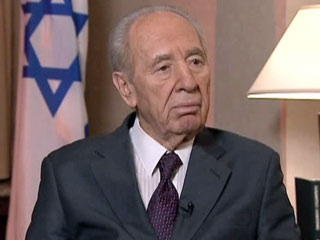
Throughout the ages, the Jewish people have seen many hooligans who have been deaf to our yearning to live at peace. Many inflicted physical harm on our people. Others have sought harm to Jews in more subtle ways. Still, few could have anticipated that the latest “hooligan” to insult the Jewish people would be none other than Stephen Hawking, the renowned cosmologist and wheel-chair bound victim of ALS. Hawking had initially accepted an invitation to appear next month at Facing Tomorrow: The Israeli Presidential Conference under the auspices of President Shimon Peres. Then, Hawking backed out of attending the conference. When the news media reported that it was due to Hawking joining an academic boycott of Israel, first Cambridge University released a statement that he cancelled due to health reasons. Then, as memos leaked clearly revealing Hawking’s true rationale, Cambridge was forced to clarify that in fact he was withdrawing out of sympathy for the boycott. The university released a statement indicating that Dr. Hawking had told the Israelis that he would not be attending “based on advice from Palestinian academics that he should respect the boycott.”
Hawking apparently came under the influence of our modern day hooligans, the Boycott-Divestment-Sanctions movement, or BDS. They are often more subtle than tormenters of Jews in generations past. For one thing, they often say they have no problem with Jews, only the State of Israel. However, the Jewish yearning for a Jewish national home in the Land of Israel is intricately connected with our religious tradition, and attacks on the legitimacy of Israel often feel like anti-Semitism and in fact often are. People who espouse such a view are “hard of hearing” in the sense that they don’t hear our pain over this ostracism. The insidious attacks on the legitimacy of Israel through BDS are carried out by a modern day, sophisticated, gang of hooligans who have intoxicated Western circles of intelligentsia and academia. While most Israelis and Jews around the world are sympathetic to the national aspirations of Palestinians, it is disheartening, to say the least, when seemingly intelligent people are willfully deaf to the aspirations of the Jewish people. Israel is a democracy that promotes free expression and advanced scientific inquiry. Through scientific discovery, Israel contributes more per capita to the world’s quality of life than just about any other nation. Furthermore, Israel has committed itself to a two-state solution in which a Jewish state would sit peaceably side-by-side with a Palestinian state. Yet, this is not good enough for the BDS Movement that seeks to undermine the very legitimacy of the State of Israel through prevailing upon academic institutions, scientists, professors and artists from dealing with Israel or Israelis in a spirit of open exchange of ideas.
Before discussing the Hawking episode further, it’s important to note where we find ourselves in the Torah reading cycle this week. We begin reading the fourth book of the Torah, Bemidbar, the Book of Numbers.
The way our calendar works, this week’s Torah reading usually falls the week in which we are to observe Shavuot, the Festival celebrating the gift of the Torah to the Jewish people. The midrash note the juxtaposition and wonder aloud why God gave the Torah in the desert. One midrash reads: The Torah was given in the desert so as not to incite dissension among the tribes, so that one will not say “In my land the Torah was given,” and the other will say “No, in my land it was given.” Therefore, was the Torah given in the desert, in no-man’s land (b’farhesia). This midrash continues: The Torah was likened to three things—desert, fire and water—to teach you that just as these things are free, the words of the Torah are free to all who come into this world.
(Yalkut Shimoni, Parashat Yitro, Remez 286)
The Talmud elaborates further on the theme of openness and transparency: “One should be as open as a wilderness to receive the Torah” (BT Ned. 55a). It is intimidating to open oneself to the demands of God, to a new and morally demanding way of life. The Torah portrays the people Israel as periodically wishing they were back in the predictable, morally undemanding servitude of Egypt. Yet Israel’s willingness to accept the Torah, to be “as open as the wilderness” to let the Torah’s morality fill the moral vacuum in the lives of former slaves, was the essential first step in God’s remaking the world. For the first time, God’s world will contain a model people, guided by the Torah to live a God-oriented life.
The image of the desert in the eyes of the rabbis is not one of barrenness. Rather, it is one of openness. A journey through the desert provides time and space for thinking and open inquiry. It is unencumbered by the biases of specific societies. In modern times, scientific conferences should serve the purposes of scientists coming together from all parts of the world for the sake of the betterment of humanity. Political boycotts run afoul of the very purpose these conferences serve.
Sadly, Stephen Hawking, despite all of his well-deserved accolades over the years, sullied his reputation with his decision to cancel a trip to Israel. It was strikingly odd in light of the fact that he appeared in Israel four times previously. Aside from his recognized genius in exploring the origins of the universe, Hawking is also known for being paralyzed from ALS and using a computer to speak. One can hardly overlook that much of the sophisticated computer technology that enables Hawking to speak was made in Israel. In addition, Israel has been at the forefront in developing treatments for ALS.
In response to Hawking’s cancellation, Israel Maimon, the chairman of the conference, strongly criticized the professor’s decision, saying in a statement, “The academic boycott of Israel is in our view outrageous and improper, certainly for someone for whom the spirit of liberty lies at the basis of his human and academic mission.” He added: “Israel is a democracy in which all individuals are free to express their opinions, whatever they may be. The imposition of a boycott is incompatible with open, democratic dialogue.”
As we begin our reading of Bemidbar and prepare to celebrate Shavuot, let us take to heart the spirit of the desert that it will continue to inspire in us the thirst for knowledge and inquiry that for thousands of years has been a beacon of light for humanity. We may encounter obstacles that seek to obscure this light, but let us not waver from our noble pursuit of truth.
#TieBlog The Book of #Numbers Parashat #Bemidbar
9 May
Another numbers tie? Well, that’s because we’re starting to read the Book of Numbers, or Sefer Bemidbar in Hebrew. Bemidbar literally means “in the desert.” The English name “Numbers” relates to the census of the people described in the opening of the book.

#TieBlog Go #Bulls!
5 May
Ok, so it’s not exactly a tie connected to a Torah portion. I’m just showing some native Chicago pride in light of the Bulls advancing in the playoffs. Then again, I may recycle this tie when we read in the Torah about the Red Heifer.
The Torah’s call to create a culture of giving
3 May There’s a story about a child who asks his father a question. “Can you explain to me what a conscience problem is?” he asks. The father replies: “I’ll give you an example. If a customer comes into my store and buys something for one dollar, and by mistake gives me three dollars, I suddenly have a conscience problem–do I tell my partner or not?”
Let’s unpack this story. The humorous force of the story is tension of the pause in the father’s response. We expect him to struggle whether to keep the extra two dollars or return the money, as he should, to the customer. Instead, his extreme greed is exposed, and his struggle is over keeping all of his ill-gotten profit or sharing it with his business partner.
We all know that adherence to Jewish—and broader societal–ethics would demand us to return the money. Yet, many of us can sympathize with the temptation to keep money that lands in our lap. In fact, some people might say that we live in a dog-eat-dog world. You take what you can get, and if you let others take it from you, then you are a sucker and a loser. Leo Durocher’s saying, “Nice guys finish last,” resonates widely in our society.
It turns out, though, that Leo Durocher was wrong. An important new book explores the inner dynamics of giving and taking and upends conventional wisdom. The book is Give and Take: A Revolutionary Approach to Success. The author is Adam Grant, an organizational psychologist and management expert. At the age of just 31, he is the youngest tenured professor ever at the Wharton School of Business at the University of Pennsylvania, where he teaches. Grant notes that people in society fall into three categories: givers, takers and matchers. Whereas takers strive to get as much as possible from others and matchers aim to trade evenly, givers are the rare breed of people who contribute to others without expecting anything in return. Through exhaustive research, coupled with an engaging narrative, Grant argues that giving is an under-recognized key to success.
The timing of this book is important. Grant writes that in earlier parts of American history people worked in independent jobs producing goods. They did not always need to collaborate with other people, so it was fairly inefficient to be a giver. But now, a high percentage of people work in inter-connected jobs providing services to others.
He notes that most people act like givers in close relationships. In marriages and friendships, we contribute whenever we can without keeping score. However, outside of our innermost circles, people are more likely to be takers and matchers. He argues that incorporating more giving tendencies in all aspects of our lives actually yields more happiness and success.
“When givers succeed, their success spreads and cascades,” he writes. “Givers succeed in a way that creates a ripple effect, enhancing the success of people around them.” He quotes a venture capitalist who says, “‘It’s easier to win if everybody out there wants you to win. If you don’t make enemies out there it’s easier to succeed.'”
Last month, the New York Times Magazine published a cover story about Grant titled, “Is Giving the Secret to Getting Ahead?” The article not only discusses the book, it also profiles Grant himself and how he is highly regarded as a teacher. He both talks the talk and walks the walk. He is generous of his time with his students in providing extensive office hours, introducing them to connections in his network and answering every email in a thorough, thoughtful way. I must say that having read his book and learning more about Grant through interviews, I was inspired to write to him. I asked him some technical questions and also observed that his thesis that giving is the key to success is relevant to synagogue life (more about that shortly). Less than two days later I received an extensive personal response in which he answered every question. The email bore a time signature of 1:33 AM. I was blown away. Moreover, he identified himself as “a fellow lighter of the menorah,” and I was touched by this additional sense of personal connection.
I believe the Jewish connection to the book Give and Take goes far deeper than the author’s personal background. We close the Book of Leviticus with the double Torah portion Behar–Behukotai that bursts forth with ideal of a society rooted in the culture of giving. Even one’s own land must be given a Shabbat every seventh year and not be tilled. The people must subsist solely on the land’s naturally yielded fruit. After seven cycles of Sabbatical years, the 50th year is a Jubilee year in which all slaves go free and all land returned to its original owner. Through these practices, the Israelites are to cultivate a culture of giving that connects God, the people and the Land in a covenantal symbiosis.
It’s to be expected that this ideal picture is not an easy sell. According to the text, God Himself anticipates the anxiety of the people in the Sabbatical year. They might say, mah nochal bashanah ha-sheviit, “How are we supposed to eat in the seventh year?” (25:20). Put differently, “I understand the ideal of all this giving stuff, but can’t I take something for myself?” God reassures them that they need not worry. They will be blessed with abundance. God then reminds the people what’s really at stake in this whole discussion:
Ki li Haaretz, ki gerim v’toshavim atem imadi, “For the Land is Mine; you are but strangers and sojourners with me” (25:23). Rabbi Harold Kushner notes that the Israelites, like all people, are but God’s tenants. They are resident aliens in the Land. Only if they live up to the terms of the Covenant will they endure there.
The Torah reminds us that while we might think we acquire property, such as Land, let’s not kid ourselves. Ultimately, it belongs to God. During our lifetimes, we are given a sacred trust to safeguard the Land so that future generations may enjoy it as well. The Torah reminds us to take on the mindset of givers, not takers. Rather than tolerating people going through life as takers, concerned only with advancing our own personal interests, the Torah calls on us to think outside of ourselves. Doing so has the effect of benefitting everybody, including ourselves.
I am very taken by Adam Grant’s call to cultivate a mentality of giving. As the rabbi of a synagogue, I believe the congregation is an ideal laboratory for creating a culture of giving. The book Sacred Strategies: Transforming Synagogues from Functional to Visionary, an important study of contemporary synagogue culture, notes that many congregations are “functional,” that is they are rooted in a consumerist transactional culture. The thinking in such synagogues is something like, “I pay dues, now what can you do for me?” Applying Adam Grant’s thesis, I now understand this as a “taker” or “matcher” culture. In contrast, synagogues that are rooted in a culture of relationship building are termed “visionary” congregations, and these are the congregations that will be most successful in this era. Having read Adam Grant, I now understand a visionary congregation as embodying much more of a “giver” culture. In such a synagogue, there is a pervasive sense that we are part of something larger than ourselves. As we close the book of Leviticus this Shabbat, let’s take with us God’s reminder that we are merely tenants on this earth and that our lives will be most fulfilled when we cultivate humility, generosity and gratitude. In so doing, we will create wholeness in our community and in all of our relationships. May we be so blessed.
Introduction to Talmud with Rabbi Bernstein Podcast
2 May
http://ttwbb.podbean.com/2013/05/02/introduction-to-talmud-with-rabbi-bernstein/
Study of Tractate Berakhot continues on daf 15a–Does recitation of Sh’ma need to be audible? Explore this and other questions.


Elevating our Community Conversation on Facebook
26 AprNormally, when the Torah states that God told Moses to convey a message to another party, the text uses the phrase “vaydaber Hashem el Moshe leimor, daber…” However, at the beginning of our parashah the Torah states “vayomer Hashem el Moshe emor…” Why does the Torah use the word the word emor, “say,” instead of daber, “speak”? In Yevamot 114a, the Talmud explains that the word emor was used not only to signify that the priests should maintain their level of ritual purity, but that they must also teach their children this law. How does the use of the word emor indicate this additional commandment? Rabbi Samson Raphael Hirsch explains that “whereas daber is the concise expression of a thought, emor is addressing the same to the mind and feeling of another person, the complete explanation of development of a thought.”
By utilizing the word emor, instead of daber, the Torah expresses the value of communicating with others in such a way that they do not simply hear us speaking to them, but that they fully understand what we are saying. I’ve commented in the past that email and the electronic social media are no substitutes for real conversations. When we have sensitive matters that need to be discussed that are emotional in nature, it’s best to do so face to face. However, used properly, the social media, such as Facebook, are great tools to serve as catalysts to conversation and community building. Facebook provides an easy and visually pleasing portal to share information and comments in an open and democratic forum and can serve as a framework for establishing more meaningful and substantive personal interaction.
Over the past year, the Temple Torah staff and I have engaged in training in social media and how best to use it with the goal of strengthening community. More than just a portal for sharing information, Facebook can serve as a tool for building relationships. We have been receiving consulting from an organization named Darim (http://www.darimonline.org). Their mission is to helping Jewish organizations align their work for success in the digital age. Our Temple Torah staff team was selected to participate in their social media Boot Camp where we learn best practices in this new and exciting medium.
Lately, we’ve posted some items on our Temple Torah Facebook Page (http://www.facebook.com/TempleTorah) with the goal of sparking community conversations across generations. I was very impressed with the responses last week in which I asked everyone to complete the following sentence: “I love Israel because…” If you haven’t seen the page, let me share some of the responses that are publicly posted. These represent an amazing cross-section of members of different ages all addressing something we all care about, Israel.
Valentin: I love Israel because after Centuries of galut the Jewish people returned to their G-d given promised land; because it personify everything what is good about Jews – hard work, ingenuity, love and respect to the science, bravery in defending our Motherland; and because I cried uncontrollably when I pressed myself against the Western Wall – the first one out of the endless line of my ancestors who could do it in Jerusalem, let’s this name to be a holy one.
Lynda: I love Israel because it is a testament to the will of our people who survive and thrive despite all odds and obstacles, a start up nation that is a haven for the persecuted, a place of return for those who yearn and a beacon of light to the world.
Lee:I love Israel because it is home for every Jew in the world.
Phillip: I love Israel because it provides an environment for the Jewish people that allows the ultimate fulfillment of the Jewish spirit.
Marlene: I love Israel because Israel is the homeland for all Jews throughout the earth.
Debbie: I love Israel because it is truly ours and it is home.
Varda: It brings our past to the present. A “present” to the Jewish People.
Marjorie: I love Israel because it is where I belong.
Lea: I love Israel because it is alive with the fulfillment of God’s promise of a land of milk and honey. Whenever I visit, I am home.
Jeffry: I Love Israel because it demonstrates how much people committed to a common goal can do. When you realize that it started as a desert and now look at how many things grow there!
With Israel setting the tone for community conversation, our next step that we have planned with our coach is to drill down and actually talk about ourselves as a community. Yesterday, I posted: Complete the following sentence: My first experience being welcomed at Temple Torah was…. Our hope is that by sharing these positive experiences publicly, we will together become more mindful of the culture of welcome that we cherish and make it even stronger. Here are some of the responses that were posted since Thursday night:
Susanne: Our first experience was being greeted after services on a Shabbat morning by three or four people, among them Madelyn Saul, who instantly took us under her wing, and the rest is history.
David: When we moved up here from Davie, and looked around for the best pre-K we could find and decided on Temple Torah’s, Alyssa was 2 and she has been in school their ever since 9 years later. It didn’t hurt that [my sister-in-law and brother-in-law] were already members.
Janet: I joined Temple Torah 3 1/2 years ago and was immediately welcomed into an adult b’not mitzvah class with the most incredible women ever. Since then, I have met so many wonderful people and love the sense of family that Temple Torah engenders.
In coming weeks, watch for more questions that will be posted by Temple Torah staff members that we hope will engender reflection and thoughtful conversation on how Temple Torah can be the best, most welcoming community it can be.
In conclusion, our tradition derives great wisdom in our Torah portion’s language of emor—speak with your whole self. Speak with empathy for the one to whom you’re speaking, and speak with the intent to listen. As Temple Torah grows in its adaptation of the most current technologies available, it is my hope that the spirt of emor will carry the day among all of us. Emor, rather than daber. Emor—speaking and empathic listening for the sake of building a community of relationships.
Visit Temple Torah’s Facebook Page at http://www.facebook.com/TempleTorah.
 From Huffington Post
- An error has occurred; the feed is probably down. Try again later.
 Rabbi Ed Bernstein